
Prepaid vs. Postpaid Phone Plans: What the Difference Actually Costs You

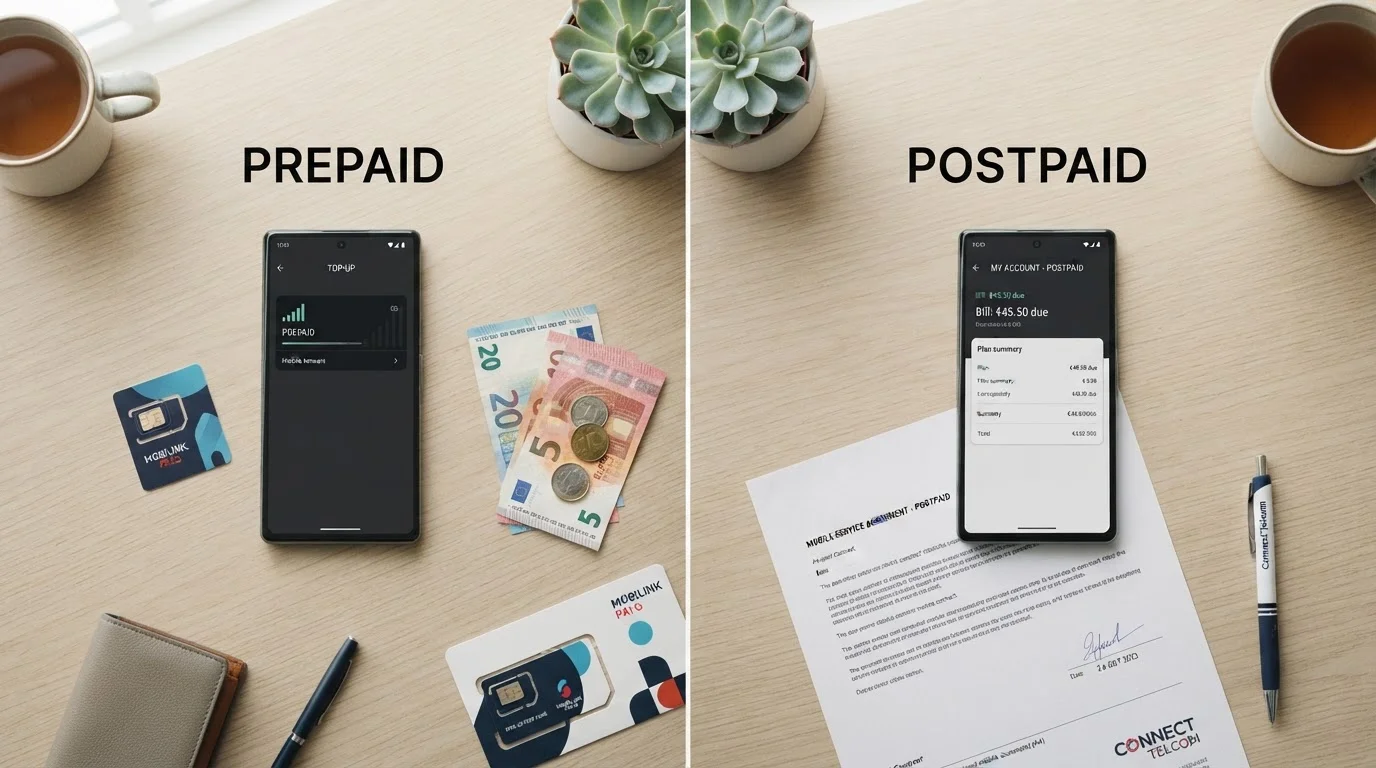
Photo: QuickSearches.net | It Doesn't Get Quicker Than This! editorial
Key Takeaways
- Prepaid plans typically cost less per month, but rarely include device financing or premium network priority.
- Postpaid plans offer stronger coverage guarantees and perks, but lock-in costs and fees can add up significantly.
- Many prepaid plans run on the same towers as major carriers - network quality is often not the real differentiator.
- Taxes and fees are usually included in prepaid pricing but added on top with postpaid bills.
- Switching costs and device compatibility are practical hurdles worth researching before changing plan types.
The Core Difference: When You Pay and What That Means
The names say it plainly: prepaid means you pay before service begins; postpaid means you're billed after a month of use. That billing sequence drives almost every other difference between the two plan types - pricing structure, credit requirements, device options, and even how the carrier treats your data when the network gets congested.
With prepaid, carriers collect payment upfront, so there's no credit risk to them. That removes the need for a credit check and lets them offer service with no long-term obligation. With postpaid, the carrier extends you a month of service on credit - and that relationship gives them leverage to offer device financing, loyalty perks, and bundled extras, while also creating early termination fees and installment payoff requirements if you leave.
Understanding this dynamic helps decode why postpaid plans often appear more expensive on paper yet remain popular. It's not just about the monthly rate - it's about what the billing relationship unlocks, and what it costs you to exit it. Before signing up for anything, it's worth reviewing how wireless carrier pricing actually works, including autopay discounts, line fees, and taxes that carriers don't always advertise upfront.
Breaking Down the Real Monthly Cost
Advertised prices for both plan types can obscure the real monthly number. Here's where each type tends to hide costs - or save them.
| Criterion | Prepaid | Postpaid |
|---|---|---|
| Taxes & fees | Usually included in advertised price | Typically added on top of rate |
| Credit check required | No | Yes, in most cases |
| Device financing | Rarely available | Standard offering |
| Contract or commitment | None - month-to-month | Often tied to device installments |
| Network priority | Lower during congestion | Higher priority access |
| International options | Limited; varies by provider | Broader roaming packages |
| Multi-line discounts | Available but less deep | Deeper per-line discounts |
| Bundled perks (streaming, etc.) | Uncommon | Frequently included |
Prepaid pricing is usually all-in. The rate you see on a prepaid plan most often includes taxes and regulatory fees. That $35/month plan typically costs $35, full stop. Postpaid plans, by contrast, routinely add $5-$15 per line in taxes and fees on top of the advertised rate - meaning a $60 postpaid plan can land closer to $70-$75 on your actual bill. The hidden costs buried in no-contract wireless deals article covers similar fee traps worth knowing before you commit.
$15-$25
Typical monthly savings with prepaid over postpaid
Consumer Reports and CNET analyses have found equivalent-data prepaid plans commonly cost $15-$25 less per month than postpaid counterparts on the same underlying network.
70%+
Prepaid users on major carrier networks
According to FCC data, the majority of prepaid subscribers in the US use service that runs on one of the three largest national carrier networks, either directly or through an MVNO.
$8-$15
Average taxes and fees added to postpaid bills per line
Industry billing analyses consistently show postpaid subscribers pay $8-$15 per line in taxes, regulatory fees, and surcharges beyond the advertised monthly rate.
Autopay discounts, which many carriers require to get the advertised postpaid rate, add another variable. Miss a payment or switch payment methods and your bill may jump $5-$10 per line immediately. Prepaid plans are less sensitive to this because the payment is made in advance.
Network Priority, Coverage, and What 'Same Towers' Really Means
A common selling point for prepaid plans - particularly those run by MVNOs, or resellers that lease capacity from major carriers - is that they use the same physical towers as the big networks. That's true. But it doesn't mean the service experience is identical.
Carriers routinely apply network prioritization policies that give postpaid subscribers access to available bandwidth first during periods of high congestion. If you're in a busy urban area or at a crowded event, prepaid and MVNO subscribers may experience slower speeds even though they're technically on the same network infrastructure.
For rural coverage, the gap can be more pronounced. Some postpaid plans include roaming agreements that prepaid plans exclude, and certain network bands or extended coverage zones may only be fully accessible to postpaid subscribers. If rural or interstate travel coverage is a real concern for your usage, verify specific network agreements - not just which towers a plan uses - before switching. The phone plan shopping checklist includes coverage verification steps that apply here.
Flexibility vs. Perks: The Real Trade-Off
Prepaid's clearest advantage is exit flexibility. There's no contract, no device installment payoff, and no early termination fee. You can switch carriers every month if you want. For people whose income varies, who travel internationally and want to swap SIMs, or who just don't want a financial tether to a carrier, that freedom has real value.
Postpaid's advantage is ecosystem depth. Carrier-financed devices, international roaming packages, streaming service bundles, and multi-line family discounts are almost exclusively postpaid features. Those perks aren't free - they're built into the pricing structure - but for the right user, the bundled value can offset the higher base cost.
The honest assessment: if you buy your phones outright or through a third party, don't use carrier-bundled streaming services, and don't travel internationally on your domestic plan, most of the postpaid ecosystem advantages don't apply to you. The monthly savings from switching to prepaid in that scenario are straightforward to calculate and often substantial.
This article is for general informational purposes only. Wireless plan pricing, terms, and network policies vary by carrier and change frequently. Verify current details directly with any carrier before making a decision.
The content on this site is provided for informational purposes only and should not be considered a substitute for professional advice. While we strive to provide accurate and up-to-date information, we make no guarantees regarding its completeness or accuracy. Always consult a qualified professional for advice specific to your circumstances before making any decisions