
Month-to-Month vs. Fixed-Term Lease: Which Suits Your Situation?

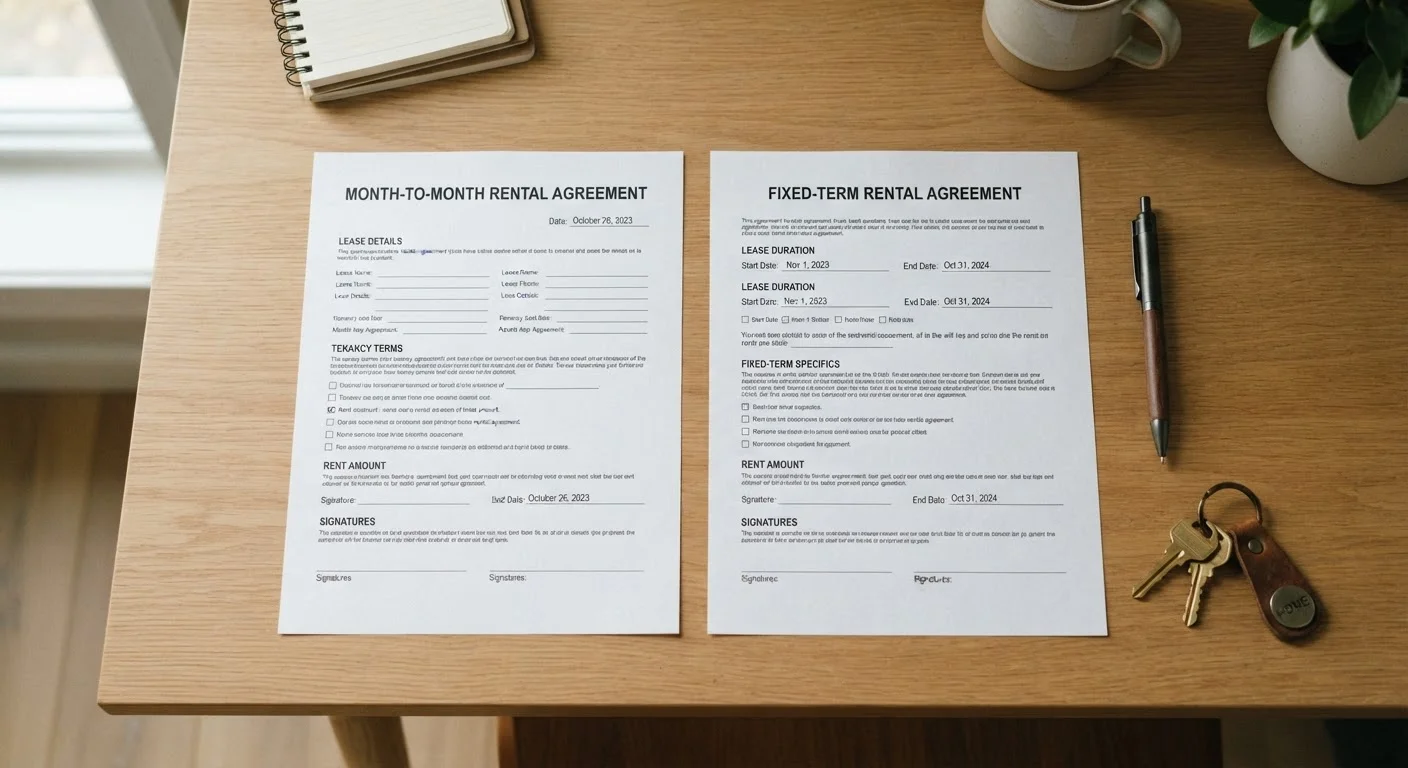
Photo: QuickSearches.net | It Doesn't Get Quicker Than This! editorial
Key Takeaways
- Month-to-month leases offer flexibility but typically come with higher monthly rent and less security.
- Fixed-term leases lock in your rent rate and protect you from sudden displacement for the lease duration.
- Breaking a fixed-term lease early can trigger significant financial penalties - understand the terms before signing.
- Landlords can raise rent or end a month-to-month arrangement with relatively short notice, depending on state law.
- Your life circumstances - job stability, family plans, local market - should drive which lease type you choose.
How Each Lease Type Actually Works
A fixed-term lease is a binding contract that runs for a defined period - most commonly 12 months, though six-month and two-year terms exist. Both the landlord and tenant agree to the rent amount and tenancy conditions for the full duration. Neither party can unilaterally change the core terms mid-lease without mutual consent.
A month-to-month lease (sometimes called a periodic tenancy) renews automatically at the end of each calendar month. Either party can terminate or modify it with proper written notice - typically 30 days in most states, though some require 60 days for longer-term tenants. Many month-to-month arrangements begin when a fixed-term lease expires and the tenant stays on without signing a renewal.
Before signing either type, it's worth reading the full agreement carefully. Understanding what your lease agreement is actually saying can help you decode the legal language and spot clauses that affect your rights.
| Criterion | Month-to-Month Lease | Fixed-Term Lease |
|---|---|---|
| Typical duration | Renews each month | 6, 12, or 24 months |
| Rent stability | Can change with proper notice | Locked in for lease term |
| Monthly cost | Often $50-$200+ premium | Generally lower base rate |
| Exit flexibility | 30-60 days' notice to leave | Penalties for early exit |
| Occupancy security | Landlord can end with notice | Protected for full term |
| Rent increase timing | Any renewal cycle with notice | Only at renewal |
| Best market conditions | Declining or stable rents | Rising rent markets |
The Real Cost Difference
Flexibility has a price. Landlords routinely charge a premium for month-to-month arrangements - anywhere from $50 to $200 or more per month above a standard annual rate - because the uncertainty carries risk for them, too. In high-demand rental markets, that gap can be even larger.
With a fixed-term lease, your rent is contractually frozen for the lease period. Even if local rents spike 8% during the year, your landlord cannot raise your rate until renewal time. That protection has genuine financial value in volatile markets.
~$100+
Typical monthly premium for month-to-month
Industry estimates suggest month-to-month tenants commonly pay a meaningful premium over standard annual lease rates, though amounts vary widely by market and landlord.
2-3 months
Common early termination penalty range
Many standard fixed-term lease agreements include early termination clauses requiring payment equivalent to two to three months' rent, subject to state law.
30-60 days
Typical landlord notice period for month-to-month termination
Most U.S. states require landlords to provide 30 days' written notice to end a month-to-month tenancy; some states mandate 60 days for tenants who have rented longer than one year.
Early termination is where costs can escalate sharply on a fixed-term lease. Many lease agreements include an early termination clause that requires payment of two to three months' rent as a penalty. Some states cap these fees by law, but others give landlords wide latitude. If there's any chance you'll need to leave early, understand your options for breaking a lease without breaking your finances before you commit.
Stability, Security, and Landlord Power
A fixed-term lease is one of the strongest protections a renter has. As long as you meet your obligations, the landlord generally cannot evict you or raise your rent before the lease ends. You have a legally enforceable right to occupy that unit for the full term - a meaningful safeguard against displacement.
Month-to-month renters have much weaker occupancy security. Depending on state and local law, a landlord may issue a termination notice with as little as 30 days' warning, for reasons ranging from wanting to sell the property to simply preferring a different tenant. Rent increases on rolling leases also require only proper notice, not a new negotiation.
That said, flexibility cuts both ways. Month-to-month tenants can walk away on similar short notice. For renters navigating job changes, relationship shifts, or an impending home purchase, that exit ramp has real value. If you're weighing renting against buying altogether, a balanced look at renting vs. buying trade-offs can help clarify the bigger picture.
Matching the Lease Type to Your Life
The right lease structure depends almost entirely on your personal circumstances, not on which type is objectively better. Ask yourself three questions: How long do I realistically plan to stay? How predictable is my income? How much does a potential rent increase or sudden notice-to-vacate affect me?
If you're settled, employed with stable income, and building toward longer-term financial goals - including saving for a down payment - a fixed-term lease almost always serves you better. The rent lock, occupancy security, and budgeting clarity outweigh the inflexibility for most people in stable situations.
If your circumstances are genuinely fluid - new city, career transition, family changes, or waiting on a life event - a month-to-month lease's premium may be worth paying for the freedom to move without penalty.
State and Local Laws Matter Significantly
This article is for general informational purposes only and does not constitute legal or financial advice. Tenant rights and landlord notice requirements vary significantly by state and municipality. Consult a local tenant-rights organization or licensed attorney if you have questions about your specific lease or situation.
The content on this site is provided for informational purposes only and should not be considered a substitute for professional advice. While we strive to provide accurate and up-to-date information, we make no guarantees regarding its completeness or accuracy. Always consult a qualified professional for advice specific to your circumstances before making any decisions