
Wood Filler vs. Spackling Compound: Matching the Material to the Job

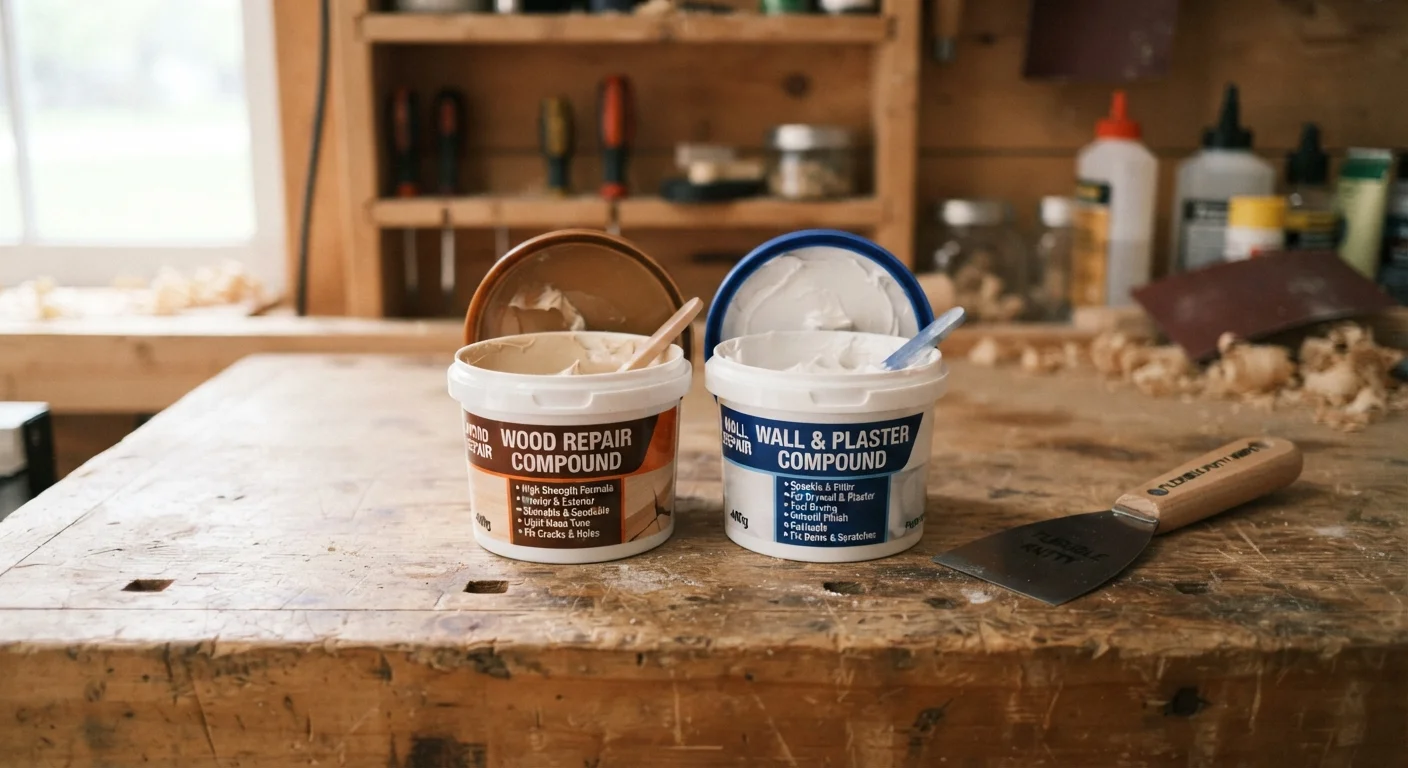
Photo: QuickSearches.net | It Doesn't Get Quicker Than This! editorial
Key Takeaways
- Wood filler bonds with wood fibers and flexes with seasonal expansion, preventing future cracks.
- Spackling compound is formulated for gypsum-based walls, not wood, and will crack under stress if misapplied.
- Neither product is truly interchangeable - the substrate and repair size determine the correct choice.
- Wood filler can typically be sanded, stained, and painted; spackling is paint-only.
- Exterior repairs almost always require wood filler, as spackling is not moisture-resistant.
Why These Two Products Get Confused
Walk into any hardware store and you'll find wood filler and spackling compound sitting on the same shelf, packaged in nearly identical tubs. Both are white or off-white, both get applied with a putty knife, and both dry hard enough to sand and paint. The confusion is understandable - but the chemistry behind each product is very different, and that difference determines whether your repair holds for years or fails within months.
The core issue comes down to what each material is designed to bond with. Wood filler contains binders that grip wood fibers and remain slightly flexible after curing, accommodating the natural seasonal movement of wood as humidity and temperature change. Spackling compound, by contrast, is optimized for gypsum-based surfaces like drywall and plaster - materials that don't flex. Applied to wood, spackling becomes brittle and tends to pop out or crack, especially in high-traffic areas or wherever the wood moves.
| Criterion | Wood Filler | Spackling Compound |
|---|---|---|
| Designed for | Wood surfaces | Drywall and plaster |
| Flexibility after curing | Slight flex, moves with wood | Rigid, may crack on wood |
| Exterior use | Yes (exterior-grade types) | No - not moisture-resistant |
| Can be sanded | Yes | Yes |
| Can be stained | Some formulas, check label | No |
| Can be painted | Yes | Yes |
| Best repair size | Small to large voids in wood | Small holes and surface dings |
| Typical dry time | 2-8 hours depending on type | 30 minutes to 2 hours |
When to Reach for Wood Filler
Wood filler is the right call any time the damaged surface is made of wood. That includes interior trim and baseboards, window and door casings, hardwood floors, wood furniture, exterior siding, and porch railings. Within the wood filler category, there are two main types worth knowing:
- Latex-based wood filler: Water-cleanup, easy to apply, suitable for small to medium repairs, and paintable. Most general-purpose wood filler at hardware stores falls in this category.
- Epoxy or two-part wood filler: Mixed before application, much harder once cured, and ideal for larger voids, rotted sections, or areas that will bear weight or take abuse. These are common in exterior repairs.
One important note: most standard wood fillers accept paint readily, but stain absorption varies by product. If you're repairing stained wood trim or furniture you plan to restain, look specifically for a stainable wood filler and always test on a hidden area first, since fillers rarely match grain patterns perfectly.
A Note on Stainable Wood Fillers
When Spackling Compound Is the Right Tool
Spackling compound shines on interior walls and ceilings. If you're filling nail holes, small anchor holes, or minor surface dents in drywall or plaster, spackling is faster and easier than reaching for joint compound - and purpose-built for the job. It typically dries in 30 minutes to two hours depending on the product and hole size, requires little sanding, and disappears cleanly under a coat of paint.
For larger drywall repairs - think fist-sized holes, damaged corners, or significant cracks - spackling alone usually isn't the right answer either. Those repairs benefit from mesh tape, joint compound, and sometimes a drywall patch. See our full guide to drywall repair for a step-by-step breakdown of those techniques.
Spackling is strictly an interior, above-grade product. Keep it away from bathrooms prone to heavy moisture, and never apply it outdoors - it will absorb water, swell, and crumble.
~30 min
Typical spackling dry time for small holes
Most lightweight spackling compounds are ready to sand and paint within 30 minutes for nail-sized holes under normal indoor temperature and humidity conditions.
2-8 hrs
Typical wood filler cure time before sanding
Latex-based wood fillers generally require at least two hours of cure time; two-part epoxy fillers may need up to eight hours before sanding, per manufacturer guidelines.
Application Tips That Apply to Both Products
Regardless of which product you choose, a few fundamentals separate a lasting repair from one that fails prematurely:
- Clean the surface first. Remove dust, grease, loose paint, and debris. Neither product bonds well to a dirty substrate.
- Slightly overfill the void. Both materials shrink a little as they dry. A slight mound above the surface level lets you sand back to flush without low spots.
- Let it cure fully before sanding. Rushing the sanding step while the material is still soft creates drag marks and uneven texture.
- Prime before painting. Patched areas - whether wood filler or spackling - tend to absorb paint differently than the surrounding surface. A coat of primer seals the patch and ensures an even sheen.
Choosing the right product from the start takes about 30 seconds of thought and can save you hours of rework. Match the material to the substrate, respect the product's limitations, and your repairs will hold up the way they're supposed to.
The content on this site is provided for informational purposes only and should not be considered a substitute for professional advice. While we strive to provide accurate and up-to-date information, we make no guarantees regarding its completeness or accuracy. Always consult a qualified professional for advice specific to your circumstances before making any decisions