
Plumbing Fixes You Can Do Without a License (And Those You Shouldn't)

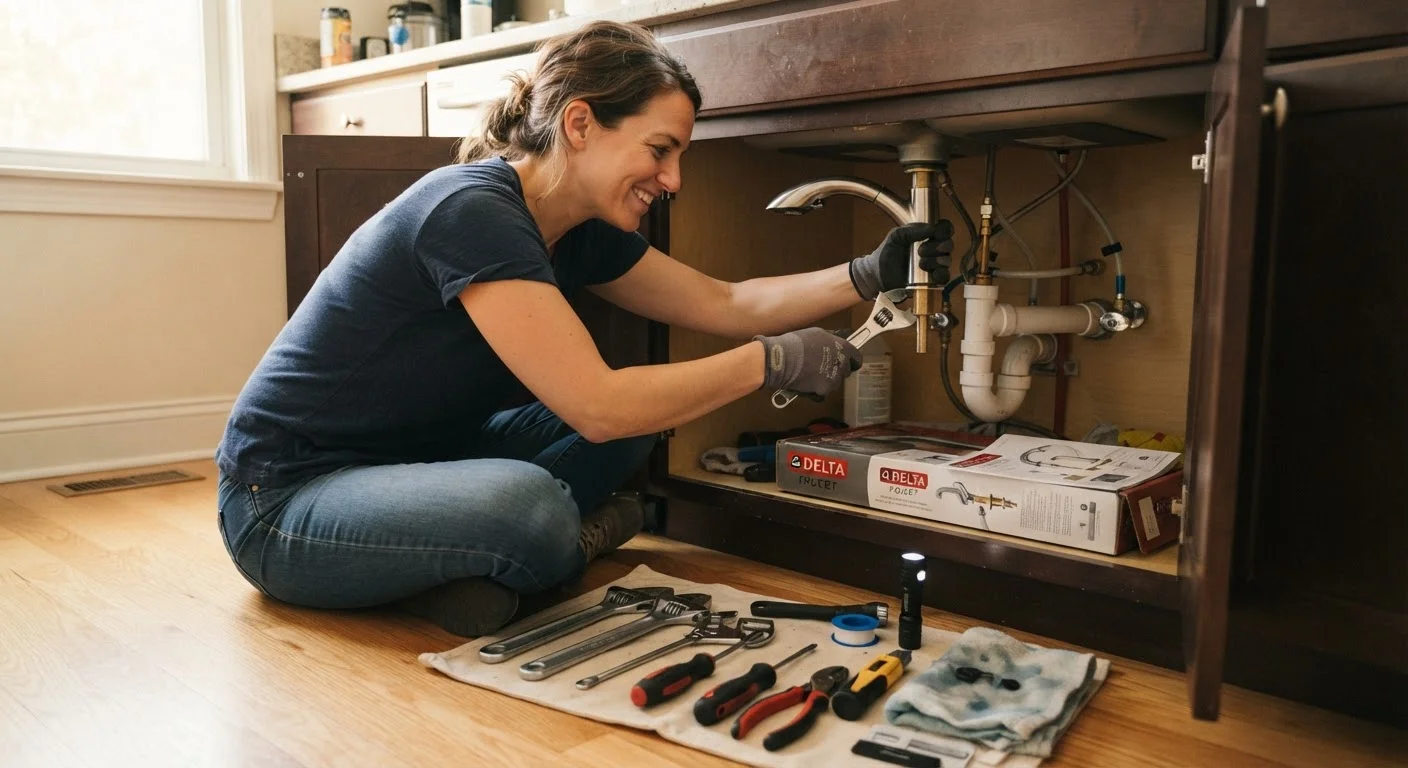
Photo: QuickSearches.net | It Doesn't Get Quicker Than This! editorial
Key Takeaways
- Fixture swaps like faucets, showerheads, and toilets are generally safe DIY territory for most homeowners.
- Any work involving main water supply lines, sewer laterals, or gas connections usually requires a licensed plumber.
- Permits are legally required for many plumbing upgrades - skipping them can create problems when selling your home.
- Doing unpermitted work incorrectly can void homeowner's insurance coverage for resulting damage.
- When in doubt, consulting a licensed plumber for an assessment is almost always worth the cost.
What Counts as DIY-Safe Plumbing
Most plumbing work that happens at the fixture level - the stuff you can see and reach without opening walls - falls within a confident homeowner's capability. These repairs don't require specialized tools, don't touch pressurized main lines, and typically don't need permits.
Safe DIY plumbing tasks include:
- Replacing faucets and showerheads - shutting off the supply valve under the sink or at the shower, swapping the fixture, and reconnecting supply lines is straightforward work.
- Fixing a running or leaking toilet - flappers, fill valves, and flush handles are inexpensive and designed for homeowner replacement.
- Unclogging drains - using a plunger, a drain snake, or cleaning a P-trap under a sink are all basic, low-risk tasks.
- Replacing supply lines and shut-off valves under fixtures - the braided lines connecting a faucet or toilet to the wall stub-out can be swapped without special skills.
- Installing a new toilet - as long as the flange is in good condition and in the same location, swapping a toilet is considered fixture replacement in most areas.
If you're new to home repair in general, our beginner's home improvement guide covers the essential tools and safety habits that make these projects go smoothly.
Always Know Where Your Main Shut-Off Is
Where DIY Plumbing Gets Risky
The line between safe DIY and professional-only work is mostly about what you're connecting to. The moment a project involves your home's main water supply line, sewer lateral, or any work requiring new pipe runs through walls or floors, the risk profile changes significantly.
Work you should leave to a licensed plumber includes:
- Main shut-off valve replacement - this requires cutting off water to the entire home and often involves soldering or pressing copper pipe.
- Water heater installation or repair - involves hot water at pressure, potential gas connections, and in most places requires a permit and inspection.
- Adding new fixture locations - running new supply or drain lines through finished walls requires permits and must meet local code for pipe sizing and slope.
- Sewer line repair or replacement - digging up and replacing a sewer lateral is regulated work in virtually every jurisdiction and requires inspection.
- Any work involving gas lines - gas plumbing is not a DIY project under any circumstances. Errors can cause fires, explosions, or carbon monoxide exposure.
Our guide to when to DIY versus call a professional provides a broader framework for making these judgment calls across all types of home repair.
~33%
Home insurance claims linked to water damage
Water damage and freezing consistently account for roughly one-third of all homeowner insurance claims, according to industry loss data - making correct plumbing repairs a significant financial protection issue.
$1,000-$4,000
Typical cost range for licensed plumber on a sewer lateral repair
The cost of professional sewer line repair varies widely by region, pipe material, and access difficulty - reinforcing why this is not a job to attempt without expertise.
$150-$350
Average plumber call-out fee for a diagnostic visit
Having a licensed plumber assess a problem before attempting DIY work can prevent costly mistakes; many homeowners find the diagnostic fee offsets larger repair costs.
Permits, Codes, and Why They Matter
Homeowners often skip permits to save time or money - but this shortcut has real consequences. Unpermitted plumbing work can void your homeowner's insurance policy's coverage for resulting damage, create disclosure problems when you sell, or require expensive tear-out and redo by a licensed plumber before a buyer's lender will approve a mortgage.
Permit requirements vary significantly by state and municipality. A project that needs a permit in one county may not in another. The safest approach is to contact your local building or planning department before any work that goes beyond like-for-like fixture replacement.
Permit Rules Vary by Locality
For a clear-eyed look at when to hire out versus tackle a project yourself - including how to evaluate your own skill level honestly - see our article on hiring a contractor vs. doing it yourself.
Frequently Asked Questions
The content on this site is provided for informational purposes only and should not be considered a substitute for professional advice. While we strive to provide accurate and up-to-date information, we make no guarantees regarding its completeness or accuracy. Always consult a qualified professional for advice specific to your circumstances before making any decisions