
Nutrient Density vs. Caloric Density: A Useful Way to Think About Food

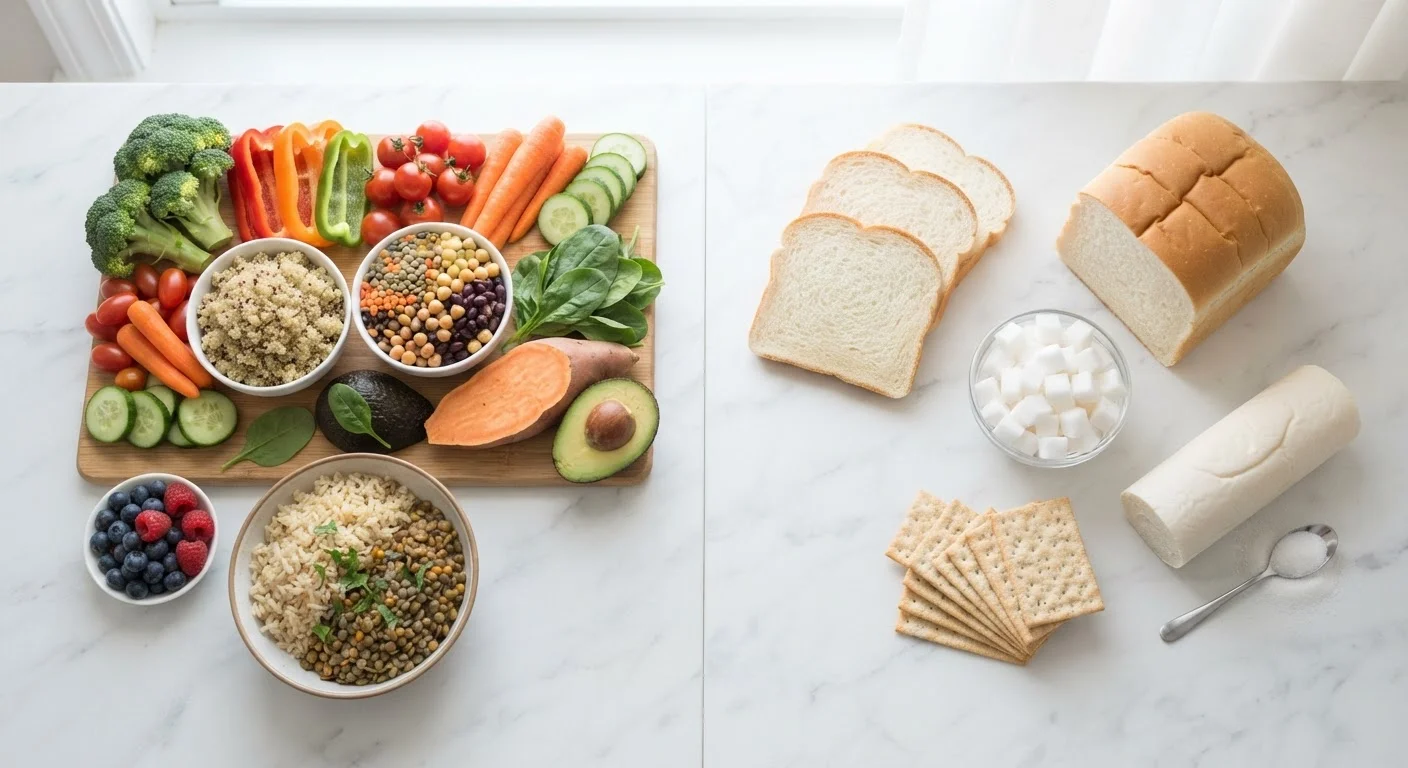
Photo: QuickSearches.net | It Doesn't Get Quicker Than This! editorial
Key Takeaways
- Nutrient density describes how many vitamins, minerals, and other beneficial compounds a food contains per calorie.
- Caloric density describes how many calories are packed into a given weight or volume of food.
- Two foods can have identical calorie counts but very different nutritional value.
- Understanding both concepts together gives a more complete picture of food quality than calories alone.
- Choosing more nutrient-dense foods generally supports overall health without requiring rigid calorie counting.
- These are educational frameworks, not medical prescriptions - consult a qualified professional for personal dietary guidance.
What These Two Terms Actually Mean
When people talk about eating well, the conversation often gravitates toward calories. But calories alone don't tell you much about the quality of what you're eating. That's where two related but distinct concepts - nutrient density and caloric density - become genuinely useful thinking tools.
Nutrient density refers to the concentration of beneficial nutrients - vitamins, minerals, fiber, protein, and phytonutrients - a food contains relative to its calorie content. A food is considered nutrient-dense when it delivers a meaningful amount of these compounds without a disproportionately high calorie cost. Leafy greens, legumes, eggs, and whole grains are commonly cited examples.
Caloric density, by contrast, is simply a measure of how many calories are contained in a given weight or volume of food - typically expressed as calories per gram or per serving. Foods like nuts and oils have high caloric density because a small portion contains a large number of calories. Broth-based soups or raw vegetables have low caloric density because you get a large volume for relatively few calories.
If you're new to thinking systematically about food, this foundational guide to nutrition concepts offers helpful grounding before going deeper into either term.
Why the Difference Matters in Practice
Consider two foods with approximately the same calorie count: a small handful of potato chips and a medium-sized apple with a tablespoon of almond butter. The calorie totals might be similar, but the nutritional profiles are strikingly different. The apple combination delivers fiber, potassium, vitamin C, and healthy fats. The chips offer very little beyond energy from refined starch and fat.
This is exactly the gap nutrient density is designed to capture. It's also why the common advice to "just count calories" can be an incomplete strategy - a point explored further in this article on what calories actually measure.
| Criterion | Nutrient Density | Caloric Density |
|---|---|---|
| What it measures | Nutrients per calorie | Calories per gram or serving |
| Primary question answered | How nutritious is this food? | How energy-concentrated is this food? |
| High examples | Leafy greens, eggs, legumes | Nuts, oils, cheese |
| Low examples | Sugary drinks, refined snacks | Broth, raw vegetables, fruit |
| Useful for | Evaluating food quality | Understanding satiety and volume |
| Can a food score well on both? | Yes (e.g., spinach, broccoli) | Yes (low caloric, high nutrient) |
Caloric density, meanwhile, has practical implications for satiety - how full and satisfied you feel after eating. Research in nutrition science generally supports the idea that eating foods with lower caloric density (high water and fiber content, low fat) can support a feeling of fullness without a large calorie load. This doesn't mean high-caloric-density foods are inherently problematic; context, portion, and overall diet pattern matter considerably.
It's also worth noting that some highly nutrient-dense foods - like salmon, avocado, or nuts - are also calorie-dense. These foods are worth including in a balanced diet despite their caloric density because of the quality of nutrients they deliver.
How to Use These Concepts Without Overcomplicating Things
Neither concept requires you to track numbers obsessively. Instead, they serve as mental frameworks for making more informed choices across meals and over time.
A practical approach many registered dietitians and nutrition educators support is asking a simple question when evaluating a food: What does this give me beyond energy? If the answer is very little - minimal fiber, few micronutrients, little protein - that food has low nutrient density, regardless of its calorie count. That's not a reason to never eat it, but it's useful context.
~90%
Americans falling short on vegetables and fruits
According to the Dietary Guidelines for Americans, roughly 9 in 10 Americans do not meet recommended vegetable and fruit intake - key sources of nutrient-dense foods.
~57%
Of U.S. calories from ultra-processed foods
Research published in BMJ Open estimated that ultra-processed foods - typically low in nutrient density - account for more than half of daily calorie intake for many Americans.
Similarly, understanding caloric density can help explain why a large salad might leave you feeling more satisfied than a small bag of crackers with the same number of calories - it comes down to volume, water content, and fiber. Building a more balanced plate doesn't require overhauling your routine; small, consistent shifts toward higher nutrient density tend to accumulate meaningfully over time.
These frameworks are also useful for cutting through some of the confusion that surrounds popular nutrition claims. Many persistent myths - like the idea that all fats are bad or that carbohydrates are universally harmful - fall apart when you apply a nutrient density lens. For a broader look at that topic, see common nutrition myths that science has largely corrected.
This article provides general nutrition education and is not a substitute for personalized dietary advice. If you have specific health conditions or nutritional concerns, consult a registered dietitian or qualified healthcare professional.
The content on this site is provided for informational purposes only and should not be considered a substitute for professional advice. While we strive to provide accurate and up-to-date information, we make no guarantees regarding its completeness or accuracy. Always consult a qualified professional for advice specific to your circumstances before making any decisions