
Meditation vs. Deep Breathing: Which Stress-Relief Practice Fits Your Life?

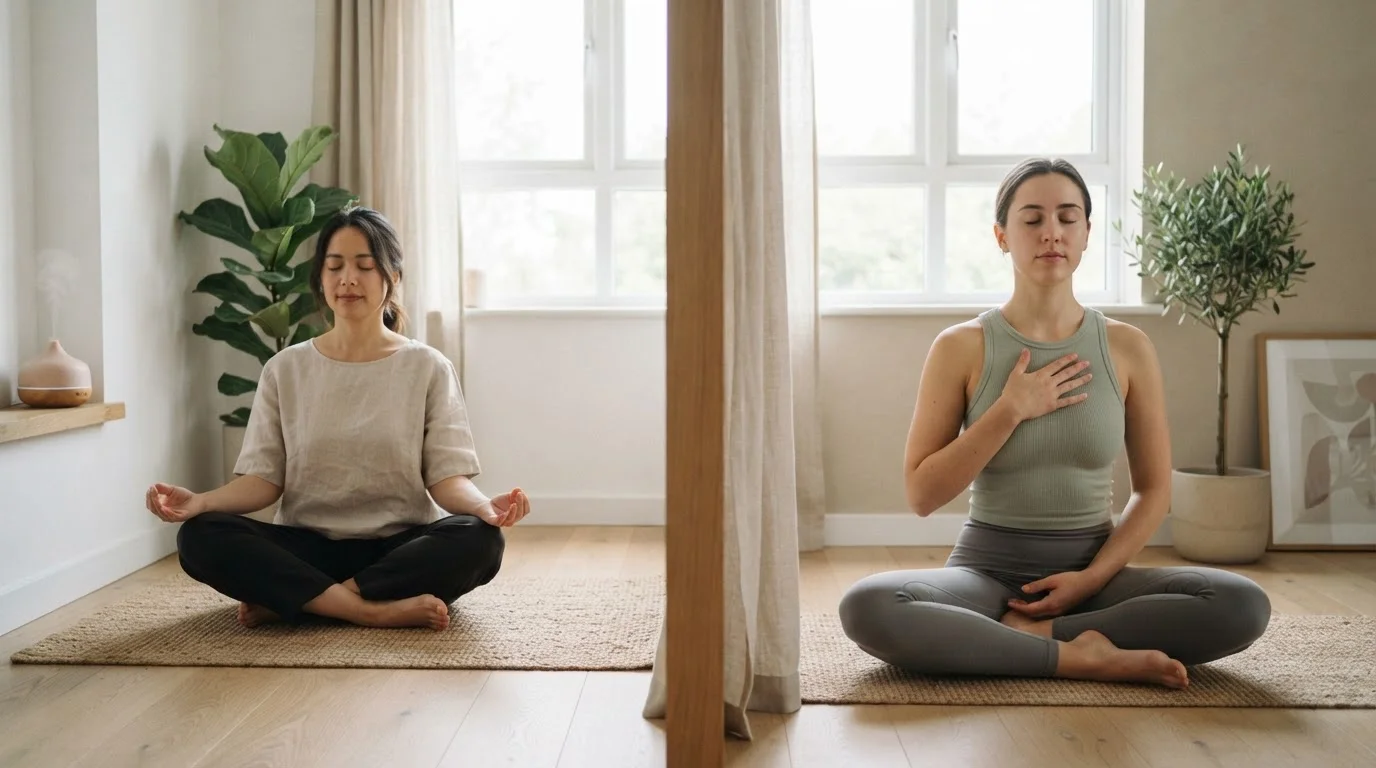
Photo: QuickSearches.net | It Doesn't Get Quicker Than This! editorial
Key Takeaways
- Both practices activate the parasympathetic nervous system, reducing the body's stress response.
- Deep breathing can deliver noticeable calm within minutes; meditation benefits typically build over weeks.
- Meditation requires more time commitment and mental tolerance for discomfort than deep breathing.
- Deep breathing is easier to learn, costs nothing, and can be done almost anywhere.
- The two practices are complementary - many people use deep breathing as the entry point into meditation.
- Neither replaces professional care for clinical anxiety, depression, or trauma-related conditions.
How Each Practice Works on Stress
When stress strikes, the body activates the sympathetic nervous system - the so-called "fight-or-flight" response. Both meditation and deep breathing counteract this by triggering the parasympathetic nervous system, often called the "rest and digest" state. Understanding how each practice achieves that can help you choose the one that fits your life. To learn more about what stress physically does to the body, see The Science Behind Why Chronic Stress Wears You Down.
Deep breathing works through a direct physiological mechanism. Slow, controlled breaths - particularly those that emphasize a long exhale - stimulate the vagus nerve, which signals the brain to reduce heart rate and blood pressure. Common techniques include diaphragmatic (belly) breathing, box breathing (inhale, hold, exhale, hold in equal counts), and 4-7-8 breathing. Effects are often felt within just a few breath cycles.
Meditation is a broader mental training practice that typically uses breath awareness as an anchor but extends to observing thoughts, bodily sensations, and emotions without reacting to them. Most evidence-based approaches, including mindfulness-based stress reduction (MBSR), involve sessions of 10-20 minutes. The benefits - improved emotional regulation, lower baseline anxiety - tend to emerge gradually over consistent practice.
| Criterion | Meditation | Deep Breathing |
|---|---|---|
| Time required per session | Typically 10-20 minutes | 2-5 minutes |
| Learning curve | Moderate; guidance helps | Low; learnable in minutes |
| When benefits appear | Weeks of consistent practice | Often within one session |
| Suitable for in-the-moment stress | Less practical mid-crisis | Highly effective on the spot |
| Equipment or setting needed | Quiet space preferred | None; usable anywhere |
| Long-term emotional regulation | Strong evidence base | Supports but less studied long-term |
| Cost | Free to low-cost options available | Free |
Practical Realities: Time, Skill, and Accessibility
One of the most honest questions to ask when choosing a stress-relief practice is: Will I actually do this regularly? The best technique is the one you'll use.
~8 weeks
Time for measurable meditation benefits
Research on mindfulness-based stress reduction programs, including work published in journals such as Psychiatry Research, suggests structural and functional brain changes can emerge after roughly eight weeks of regular practice.
< 5 min
Time for deep breathing to lower heart rate
Studies on slow-paced breathing (around 6 breaths per minute) have shown measurable reductions in heart rate variability within a single short session, according to cardiovascular and psychophysiology research.
36%
U.S. adults who report daily stress
Gallup's annual Global Emotions Report consistently finds a significant proportion of American adults reporting frequent daily stress, underscoring widespread need for accessible coping tools.
Deep breathing has almost no access barriers. It requires no equipment, no guided instruction, and no quiet room. You can practice it during a work break, before a difficult conversation, or while sitting in traffic. Most people can learn a basic technique in under five minutes.
Meditation has a steeper learning curve. Sitting quietly and directing attention inward can feel frustrating at first - the mind wanders, and for some people that feels like failure (it isn't). Apps, community classes, and online recordings can provide helpful guidance, especially for beginners. Consistency is key: sporadic sessions produce far less benefit than a modest, regular practice. If you struggle with anxiety specifically, it's worth reading Where People Go Wrong When Trying to Manage Anxiety on Their Own before committing to a solo practice.
Budget is rarely a concern with either approach. Countless free guided meditations exist through public libraries, non-profit organizations, and free app tiers. Deep breathing costs nothing at all.
Can You Use Both? And When to Seek More Support
These two practices are not rivals - they're highly compatible. Many experienced meditators use a few rounds of deep breathing as a warm-up to settle the nervous system before sitting in formal meditation. Conversely, someone who relies on deep breathing during stressful moments may find that developing a short daily meditation habit reduces how often those moments arise.
If you're building a broader wellness routine, consider how these tools fit alongside other strategies. Our guide to Building a Personal Stress-Management Routine From Scratch can help you think through the full picture, including movement, sleep, and social connection.
It's equally important to recognize what these practices cannot do. For clinical anxiety disorders, depression, PTSD, or other mental health conditions, meditation and breathing exercises may be useful complements to professional treatment - but they are not substitutes. If your stress feels unmanageable, persistent, or is affecting your ability to function at work or in relationships, please speak with a qualified healthcare provider or licensed mental health professional.
This article is for general informational and educational purposes only and does not constitute medical or mental health advice. Always consult a qualified healthcare professional for guidance specific to your circumstances.
The content on this site is provided for informational purposes only and should not be considered a substitute for professional advice. While we strive to provide accurate and up-to-date information, we make no guarantees regarding its completeness or accuracy. Always consult a qualified professional for advice specific to your circumstances before making any decisions