
Savings Rate: The One Financial Metric That Predicts Long-Term Resilience

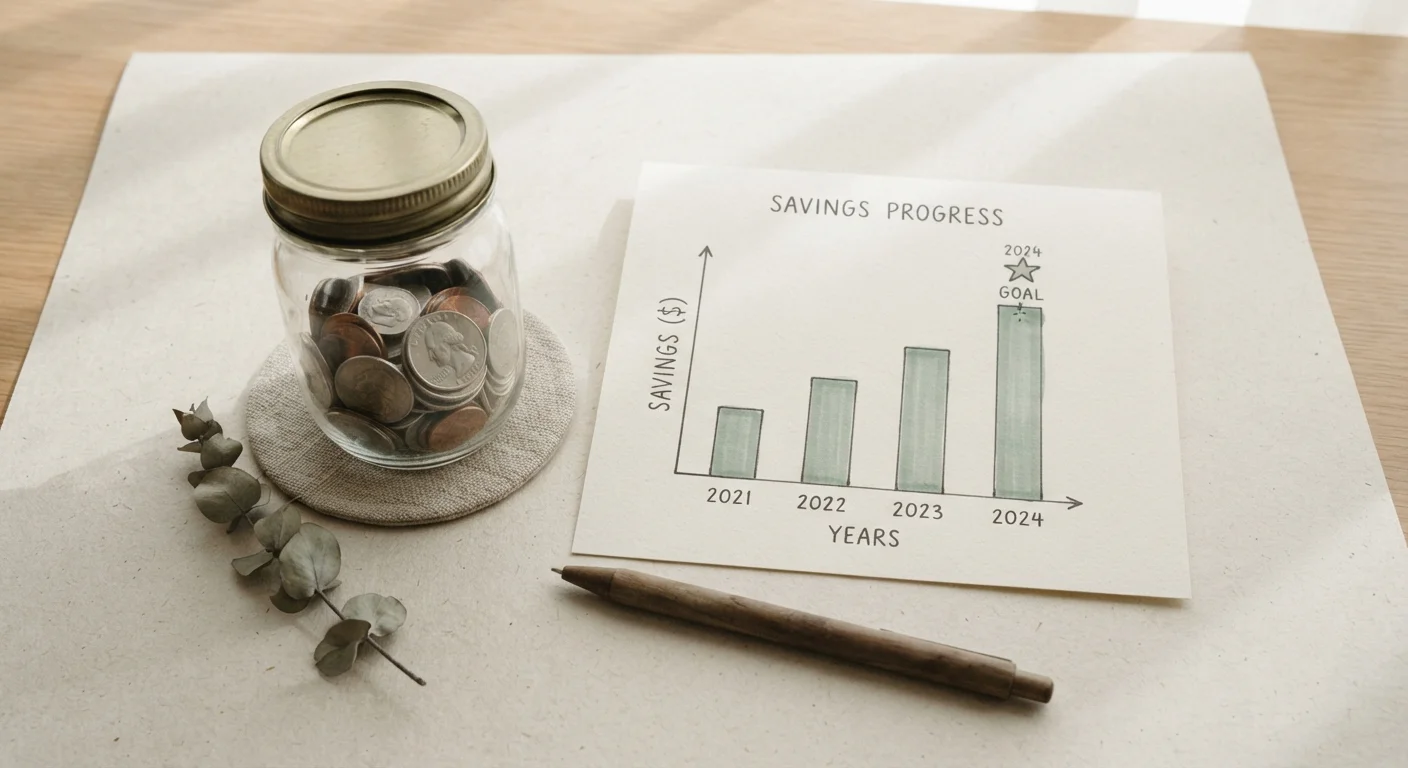
Photo: QuickSearches.net | It Doesn't Get Quicker Than This! editorial
Key Takeaways
- Savings rate measures what you keep, not just how much you earn.
- Even a modest savings rate of 10-15% can meaningfully improve long-term stability.
- Reducing expenses often raises your savings rate faster than chasing a higher income.
- Debt repayment above minimum payments can be counted as part of your savings rate.
- Automating savings removes willpower from the equation and improves consistency.
Why Savings Rate Outranks Income as a Financial Signal
Income tells you how much flows in. Savings rate tells you how much stays. The difference matters enormously: two households earning identical salaries can end up with wildly different financial outcomes depending on what fraction of each paycheck they actually keep.
This is why personal finance researchers and planners consistently point to savings rate - not income, not account balance - as one of the most reliable predictors of long-term financial health. A household earning $60,000 and saving 20% is building wealth faster than a household earning $120,000 and saving 3%. The math favors the saver, not the earner.
The U.S. Bureau of Economic Analysis tracks the national personal saving rate monthly. For much of the past decade, it has sat well below 10%, meaning most Americans are spending the vast majority of what they earn. That leaves little buffer for emergencies, let alone retirement or other long-term goals.
3.6%
U.S. personal saving rate (recent historical average)
The U.S. Bureau of Economic Analysis tracks this figure monthly; it reflects how little of their income most Americans actually retain.
15-20%
Savings rate target recommended by many financial planners
Common guidance from financial planning frameworks, though the right figure varies by age, income, and goals.
~17 years
Years to financial independence at a 50% savings rate
Projections from the financial independence research community, assuming typical investment returns and starting from zero savings.
How to Calculate Your Savings Rate
The formula is straightforward:
Savings Rate = (Amount Saved ÷ Income) × 100
The key decisions are what to count as "saved" and which income figure to use as the base.
- What counts as savings: Contributions to a 401(k), IRA, or other retirement account; transfers to a savings account; and debt repayments above the minimum. Emergency fund contributions count. Regular minimum debt payments generally do not.
- Which income to use: Most people find after-tax (net) income the more useful denominator, since it reflects dollars you actually control. If you receive employer 401(k) matching, you can choose to include that contribution in both the numerator and denominator for a fuller picture.
Example: You take home $4,000 per month. You contribute $400 to a retirement account, transfer $200 to savings, and pay an extra $100 toward student loans. Your savings total is $700, and your savings rate is 17.5% - a solid foundation.
Once you know your rate, you have a clear baseline. From there, every dollar of spending you redirect toward saving moves the number in your favor. To make the most of saved dollars, it also helps to understand where you park them - see our comparison of checking vs. savings accounts for a breakdown of how each works.
The Fastest Ways to Move the Needle
Raising your savings rate is fundamentally about widening the gap between income and spending. Both sides of the equation matter, but expense reduction tends to produce more immediate and durable results than income increases - because lifestyle inflation often absorbs new earnings before they can be saved.
Cut fixed costs first
Recurring monthly costs - rent or mortgage, car payments, insurance, subscription services - have the highest leverage. Reducing a $150 monthly subscription expense raises your annual savings by $1,800 automatically, every year, without further effort.
Refinance high-interest debt
Debt service drains cash flow that could otherwise be saved. High-interest balances in particular are mathematically destructive: every dollar spent on interest is a dollar not building your net worth. Reducing interest rates frees up cash for savings without requiring more income. For guidance on whether to prioritize debt or savings, our article on saving and paying down debt simultaneously walks through the key trade-offs.
Automate the transfer
Savings that require a manual decision each month rarely happen consistently. Setting up an automatic transfer on payday - before discretionary spending has a chance to absorb funds - removes the friction. Our guide on automating your finances covers how to build these systems effectively.
Start Small, Then Scale
Where You Put Saved Money Also Matters
Savings rate measures the flow of money out of spending and into saving - but the destination shapes the outcome. Money sitting in a low-yield checking account loses ground to inflation over time. Accounts designed for saving, particularly high-yield options, can put those saved dollars to work at a meaningfully higher rate.
If you are building or adding to an emergency fund, a high-yield savings account can offer significantly better interest than a standard savings product while keeping funds accessible. The difference compounds over months and years, even on modest balances.
For longer-horizon goals - retirement, a home down payment - tax-advantaged accounts such as a 401(k) or IRA offer growth potential beyond what a savings account can provide, though they come with different access rules and risk profiles. A qualified financial adviser can help you determine the right allocation for your specific situation.
This article is for general informational purposes only and does not constitute personalized financial, investment, or tax advice. Consult a licensed financial professional for guidance specific to your circumstances.
Frequently Asked Questions
The content on this site is provided for informational purposes only and should not be considered a substitute for professional advice. While we strive to provide accurate and up-to-date information, we make no guarantees regarding its completeness or accuracy. Always consult a qualified professional for advice specific to your circumstances before making any decisions