
Teen Drivers and Graduated Licensing: What Parents and New Drivers Should Know

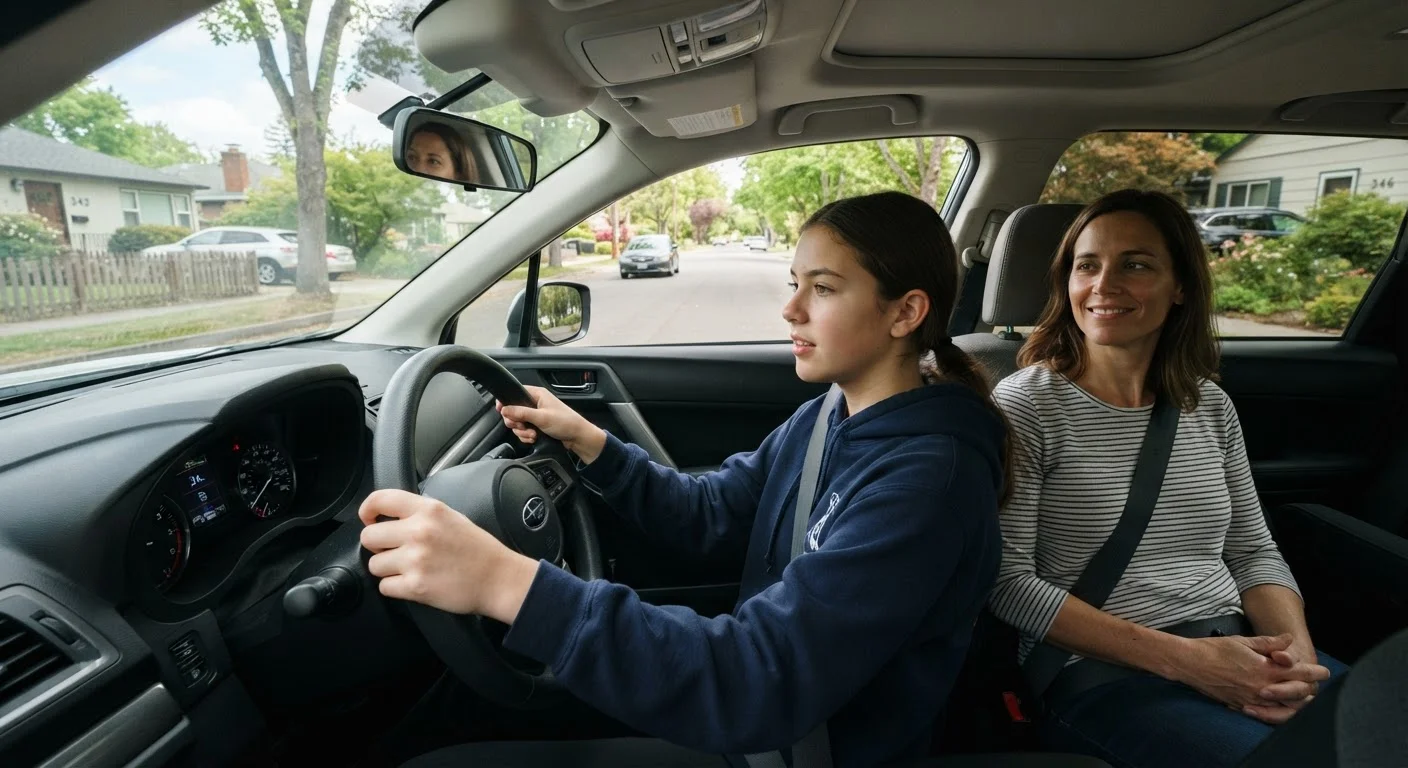
Photo: QuickSearches.net | It Doesn't Get Quicker Than This! editorial
Key Takeaways
- Every U.S. state operates a graduated driver licensing (GDL) system with multiple stages before full licensure.
- GDL programs systematically limit high-risk conditions - late-night driving and peer passengers - until experience builds.
- Supervised practice hours are required in most states, typically ranging from 40 to 65 logged hours.
- Violating GDL restrictions can delay full licensure and, in some cases, result in suspension.
- Parents who set consistent expectations significantly improve teen driving outcomes.
What Is Graduated Driver Licensing?
Graduated driver licensing - commonly called GDL - is a structured system that allows new drivers to gain experience gradually before earning full driving privileges. Every U.S. state has a GDL program, though the specific rules, timelines, and restrictions differ from state to state.
The foundation of GDL is straightforward: new drivers are statistically at the highest crash risk during their first months behind the wheel, and that risk spikes in specific situations - driving at night, driving with peer passengers, and driving on high-speed roads. GDL programs restrict or delay access to those conditions until drivers have accumulated meaningful practice in safer environments.
Understanding these rules matters both practically and legally. Driving outside of your permitted conditions isn't just a ticket - it can reset your licensing clock entirely.
Graduated Driver Licensing (GDL)
A multi-stage licensing system that gives new drivers progressively more privileges as they gain experience, with restrictions at each stage designed to reduce crash risk.
Learner's Permit
The first stage of GDL; allows a new driver to practice with a licensed adult supervisor present at all times.
Intermediate (Provisional) License
The second GDL stage; allows unsupervised driving but with restrictions such as nighttime curfews and limits on how many passengers can ride along.
Nighttime Driving Curfew
A GDL rule that prohibits teen drivers from operating a vehicle during certain late-night hours, typically to reduce exposure to fatigue and impaired drivers.
Supervised Practice Hours
The minimum number of hours a permit holder must log driving with a licensed adult supervisor before qualifying for the intermediate license stage.
The Three Stages of a GDL Program
While state programs vary in their details, virtually all follow a three-stage structure:
- Learner's Permit: The entry point for most teen drivers, typically available at age 15 or 16. During this stage, the driver must always be accompanied by a licensed adult (usually age 21 or older) in the front passenger seat. Most states require a written knowledge test to obtain the permit. This is also when supervised practice hours are logged - commonly 40 to 65 hours, depending on the state.
- Intermediate (Provisional) License: After holding a learner's permit for a minimum period - often 6 to 12 months - and passing a road skills test, teens can advance to an intermediate license. This allows unsupervised driving, but with key restrictions still in place, particularly around nighttime hours and passenger limits.
- Full Unrestricted License: Most states allow teens to graduate to a full license at age 17 or 18, provided they've held the intermediate license for the required period without serious violations and met all state-specific requirements.
Progression through the stages is not just about age - it's about time served and a clean record. A violation at any stage can push back the timeline.
Common Restrictions and Why They Exist
The restrictions that apply during the intermediate stage are grounded in crash data, not arbitrary rule-making. The most common include:
- Nighttime driving curfews: Most states restrict intermediate license holders from driving between certain late-night and early-morning hours, often 11 p.m. to 5 a.m. or similar windows. Fatigue, reduced visibility, and impaired drivers on the road all peak at night.
- Passenger limits: Many states prohibit teen intermediate drivers from carrying non-family teen passengers for the first several months. Having peers in the car is strongly associated with distracted driving and risk-taking behavior in teen drivers.
- Cell phone bans: Nearly every state prohibits the use of handheld or even hands-free cell phones for teen drivers under GDL - often a stricter standard than what applies to adult drivers.
Understanding the traffic laws beyond GDL restrictions is also worthwhile. See commonly misunderstood traffic laws for broader context on rules that trip up even experienced drivers.
Log Practice Hours in Writing
What Parents Can Do to Help
Research consistently shows that parental involvement is one of the strongest predictors of teen driver safety. This goes beyond simply logging the required practice hours.
Effective supervision means practicing in varied conditions - wet roads, highway merging, parallel parking, dense traffic - not just comfortable, familiar routes. It also means modeling the behavior you expect: consistent seatbelt use, no phone handling while driving, and calm responses to other drivers.
Many families find that creating a clear parent-teen driving agreement - written expectations covering curfews, passenger rules, phone use, and what happens if a rule is broken - helps establish accountability before problems arise. Some states even provide templates for these agreements through their DMV or highway safety offices.
Once your teen earns their full license and moves toward independent vehicle ownership, resources like car ownership basics can help them understand insurance, registration, and the financial side of driving responsibly.
Violations, Consequences, and Moving Forward
GDL violations are taken seriously by state licensing authorities. Common consequences include an extended period in the current GDL stage, financial fines, and mandatory re-testing in some circumstances. Repeated or serious violations can result in full suspension.
A suspended license at this stage creates ripple effects - affecting the ability to drive legally, potentially raising insurance rates, and complicating future driving history. The legal and financial weight of driving on a suspended or restricted license is significant, as detailed in this overview of suspended license consequences.
For new drivers, the GDL period is genuinely formative. The habits built in the first one to two years of driving - checking mirrors consistently, maintaining following distance, staying off the phone - tend to persist. Treating this phase as real driver education rather than a bureaucratic hurdle pays dividends for a lifetime of safer driving.
GDL Rules Vary Significantly by State
Frequently Asked Questions
The content on this site is provided for informational purposes only and should not be considered a substitute for professional advice. While we strive to provide accurate and up-to-date information, we make no guarantees regarding its completeness or accuracy. Always consult a qualified professional for advice specific to your circumstances before making any decisions