
Key Terms in a Car Purchase Contract

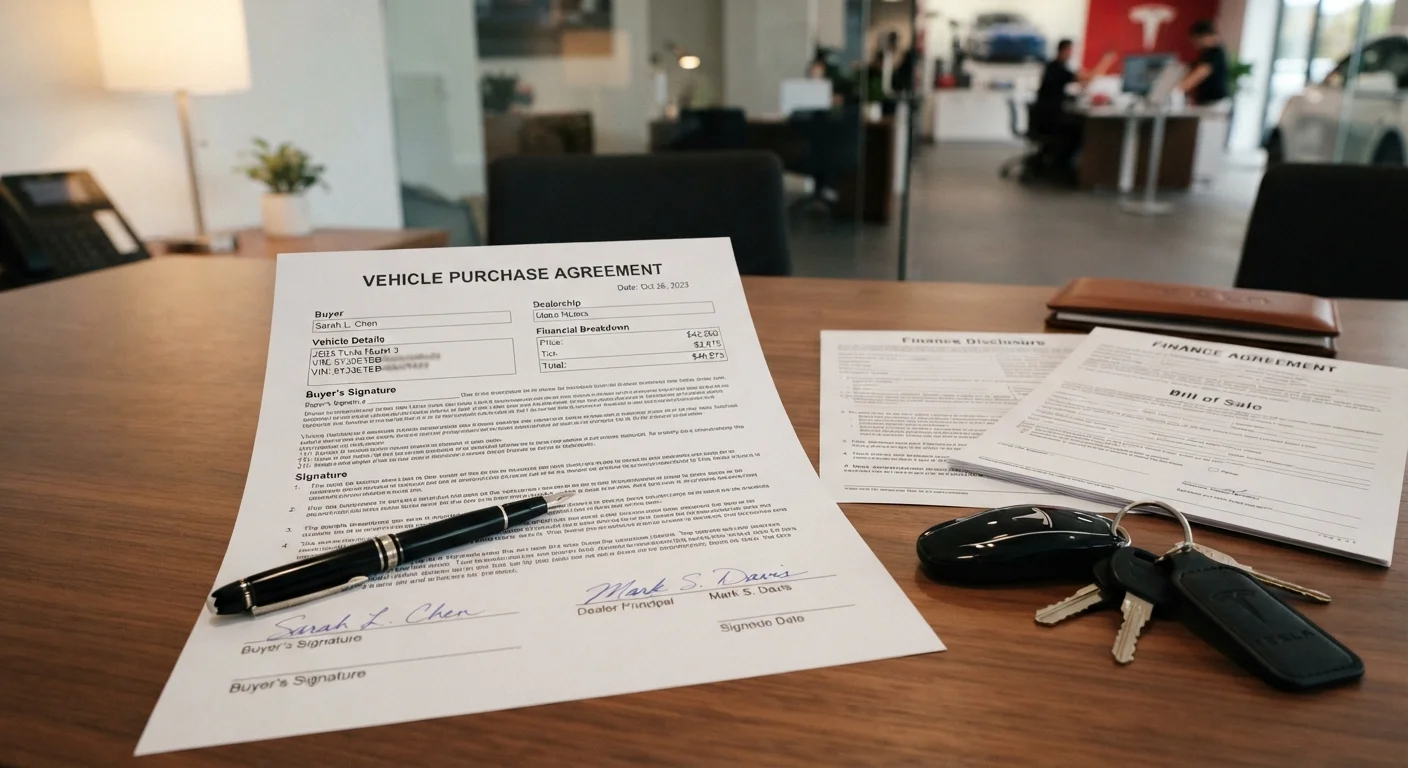
Photo: QuickSearches.net | It Doesn't Get Quicker Than This! editorial
Why Contract Language Matters at the Dealership
The finance office is where a car deal is truly made or broken. You may have negotiated a fair price on the lot, but the contract you sign determines the actual cost of ownership. Terms like APR, money factor, and dealer doc fee appear routinely in these documents, yet few buyers know exactly what they mean or how they affect the bottom line.
This reference covers the most common terms you'll encounter when closing a deal-whether you're purchasing or leasing. Use it alongside the full car-buying walkthrough for broader context, or the pre-purchase checklist to prepare before you sit down with a finance manager.
APR (Annual Percentage Rate)
The annualized cost of borrowing, expressed as a percentage, that includes both the interest rate and applicable lender fees. It allows apples-to-apples comparison between loan offers.
Money Factor
A small decimal number used to calculate the finance charge in a lease. Multiplying it by 2,400 converts it to an approximate APR equivalent.
Residual Value
The estimated value of a leased vehicle at the end of the lease term. It is set by the lender and directly affects the monthly payment.
Capitalized Cost
The agreed-upon price of a leased vehicle before any down payment is applied. Negotiating this number down reduces your monthly payment.
GAP Coverage
An optional protection product that covers the gap between the insurance settlement and the remaining loan or lease balance if the vehicle is totaled or stolen.
Dealer Doc Fee
A fee charged by the dealership to prepare purchase and title documents. Amounts vary by dealer and may be regulated by state law.
Loan Term
The agreed repayment period for a vehicle loan, usually expressed in months. Longer terms lower monthly payments but increase total interest paid.
Extended Service Contract (ESC)
A separately purchased agreement that covers certain repairs after the manufacturer's warranty expires. Coverage, exclusions, and deductibles vary significantly between contracts.
Finance and Loan Terms
Most buyers finance a vehicle, which means a cluster of loan-specific terms will appear on your contract. Understanding them prevents surprises when the first statement arrives.
| Typical new-car loan term | 60-72 months (Experian State of the Automotive Finance Market, 2023) |
| APR vs. interest rate | APR is always ≥ the interest rate |
| Money factor conversion | Multiply by 2,400 to estimate APR |
| Doc fee variability | Ranges from ~$50 to $800+ depending on state (State consumer protection agency surveys) |
| GAP coverage applicability | Most relevant when LTV exceeds 100% |
| Destination charge | Set by manufacturer; same for all buyers of that model |
Annual Percentage Rate (APR) is the yearly cost of borrowing expressed as a percentage. It includes the interest rate plus any lender fees, making it a more complete measure than the interest rate alone. A lower APR means less paid over the life of the loan. For a deeper comparison of where your rate comes from, see dealer financing vs. your own bank.
Loan term is the length of time you have to repay the loan, typically expressed in months (e.g., 48, 60, or 72 months). Longer terms lower your monthly payment but increase the total interest paid.
Principal is the amount you actually borrow-the vehicle price minus any down payment or trade-in equity. Interest is calculated on the outstanding principal balance.
Capitalized cost (cap cost) is a leasing term equivalent to the purchase price in a loan. Reducing it-through a down payment or negotiation-lowers your monthly lease payment.
Residual value is the projected worth of the vehicle at lease end. A higher residual generally means lower monthly payments because you're financing a smaller portion of the car's value.
Money factor is the leasing equivalent of an interest rate. Multiply it by 2,400 to convert it to an approximate APR. Dealers are not always required to disclose the money factor upfront, so it's worth asking directly.
Fees, Add-Ons, and Protective Products
Beyond the vehicle price and financing costs, purchase contracts routinely include fees and optional products. Knowing what each one is-and whether it's negotiable-helps you avoid paying for items you don't need.
Dealer documentation fee (doc fee) covers the dealer's cost of preparing and processing paperwork. State law limits this fee in some states; in others it can vary widely. It is sometimes negotiable or can offset elsewhere in the deal.
Destination and delivery charge is a manufacturer-set fee for shipping the vehicle from the factory to the dealership. It is non-negotiable and identical for all buyers of the same model.
GAP (Guaranteed Asset Protection) coverage pays the difference between what you owe on your loan and what your insurer pays if the car is totaled or stolen early in ownership. It's most relevant when you've made a small down payment or financed over a long term. See what dealer add-ons are actually worth for a full breakdown.
Extended service contract (ESC) is the contract-accurate term for what's often marketed as an extended warranty. Unlike a manufacturer's warranty, an ESC is a separate agreement with specific coverage terms, exclusions, and deductibles. Read it carefully before signing.
Dealer-installed options are accessories added by the dealership-such as paint sealant or window tinting-that appear as line items on the contract. Their value and pricing vary considerably; some are negotiable or removable from the deal.
You Can Request the Contract in Advance
The content on this site is provided for informational purposes only and should not be considered a substitute for professional advice. While we strive to provide accurate and up-to-date information, we make no guarantees regarding its completeness or accuracy. Always consult a qualified professional for advice specific to your circumstances before making any decisions