
Mapping Out Ground Transportation at Your Destination

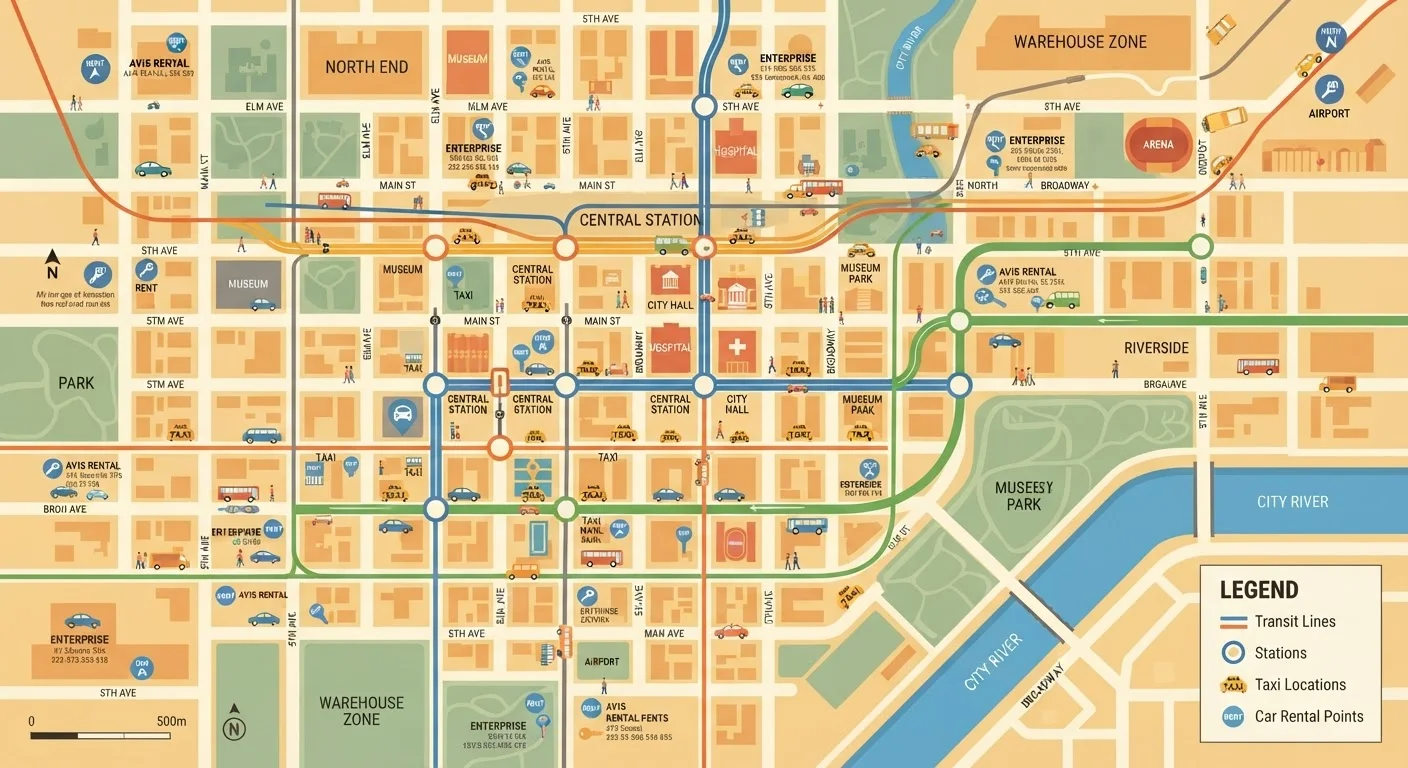
Photo: QuickSearches.net | It Doesn't Get Quicker Than This! editorial
Key Takeaways
- Rental cars make sense for rural or spread-out destinations but add costs like insurance, parking, and fuel.
- Public transit is usually the most affordable option in cities with strong networks, but requires planning.
- Rideshare apps offer flexibility but can surge in price during peak times or in less competitive markets.
- Taxis are reliable near airports and hotels but typically cost more per mile than rideshares.
- The right option often depends on your destination density, group size, and daily itinerary.
Why Ground Transportation Deserves Real Planning
Most travelers spend hours comparing flights and hotels but give almost no thought to how they'll actually move around once they land. That gap can cost real money - and real time. Getting from the airport to your hotel, navigating to dinner, reaching a national park trailhead: these aren't afterthoughts. They're the connective tissue of a trip.
The four main options - rental cars, public transit, rideshares, and taxis - each come with a different cost structure, availability reality, and set of trade-offs. Understanding those differences before you go is what separates a smooth trip from a stressful one. For a broader framework on building a well-organized itinerary, see The Anatomy of a Well-Planned Trip.
Comparing Your Four Main Options
Here's how the four ground transportation options stack up across the criteria that matter most to everyday travelers:
| Rental Car | Public Transit | Rideshare | Taxi | |
|---|---|---|---|---|
| Typical cost level | Medium-High | Low | Medium (variable) | Medium-High |
| Best destination type | Rural, suburban, multi-stop | Dense urban metro | Urban, suburban | Airport, city center |
| Flexibility | High | Low-Medium | High | Medium |
| Advance planning needed | Yes - book early | Some - learn routes | Minimal | Minimal |
| Luggage handling | Easy | Difficult | Moderate | Easy |
| Surge/unpredictable pricing | No | No | Yes | No |
| Good for groups | Yes | Moderate | Moderate | Limited |
No option dominates every category. Your destination's infrastructure and your own travel style will tip the balance.
Rental Cars: Flexibility with Hidden Costs
A rental car makes sense when you're visiting a destination where attractions are spread out, public transit doesn't reach your stops, or you're traveling with a family or group that would otherwise need multiple rideshare vehicles. Think: national parks, small coastal towns, or suburban areas where walkability is low.
Where people get tripped up is the true cost. The base daily rate is just the starting point. Add collision damage waiver coverage (check whether your personal auto policy or credit card already provides this), airport pickup surcharges, fuel, and daily parking fees - and the total can easily double the advertised price. If you're unsure whether car ownership economics are already part of your thinking, car ownership resources cover insuring and managing vehicle costs in more depth.
Check Your Credit Card's Rental Coverage
Returning the car to an off-airport location and taking a shuttle can sometimes cut rental costs, though this adds time. Factor that into your schedule honestly.
Public Transit: Best Value in the Right City
In cities with dense, reliable transit networks - think subway systems in major metros or well-integrated bus routes - public transportation is almost always the most cost-effective way to get around. Day passes and multi-day transit cards often pay for themselves after just two or three trips.
The catch is that public transit requires a bit of homework upfront. Download the local transit app or load a map before you arrive (offline maps are especially useful if you're roaming internationally). Check operating hours - some systems shut down or reduce service late at night, which affects evening plans. And be realistic about luggage: navigating stairs with a large suitcase on a rush-hour subway is a different experience than traveling light.
Don't Assume Transit Hours Match Yours
Rideshares and Taxis: Convenience at a Price
Rideshare apps like those operating in most major U.S. and international cities offer genuine convenience: no cash required, estimated fares upfront, and door-to-door service. They're especially practical for late-night returns, airport pickups when you don't want to deal with parking, or one-off trips to a neighborhood poorly served by transit.
The downside is unpredictability. Surge pricing during busy periods - major events, bad weather, rush hour - can make a short trip surprisingly expensive. In smaller destinations, driver availability may be limited, leading to long wait times. International travelers should also verify which apps operate in their destination country before relying on them.
Traditional taxis remain the more predictable option near airports and large hotels where they queue reliably. Metered fares eliminate surge pricing surprises, though the per-mile rate tends to be higher than base rideshare fares. Always confirm the fare structure before getting in - metered versus flat rate matters.
If you're still in the trip planning phase and want to map out all your logistics, Trip Planning From Scratch walks through every major phase from picking a destination to confirming bookings.
The content on this site is provided for informational purposes only and should not be considered a substitute for professional advice. While we strive to provide accurate and up-to-date information, we make no guarantees regarding its completeness or accuracy. Always consult a qualified professional for advice specific to your circumstances before making any decisions