
Caulk vs. Weatherstripping: Sealing Drafts the Right Way

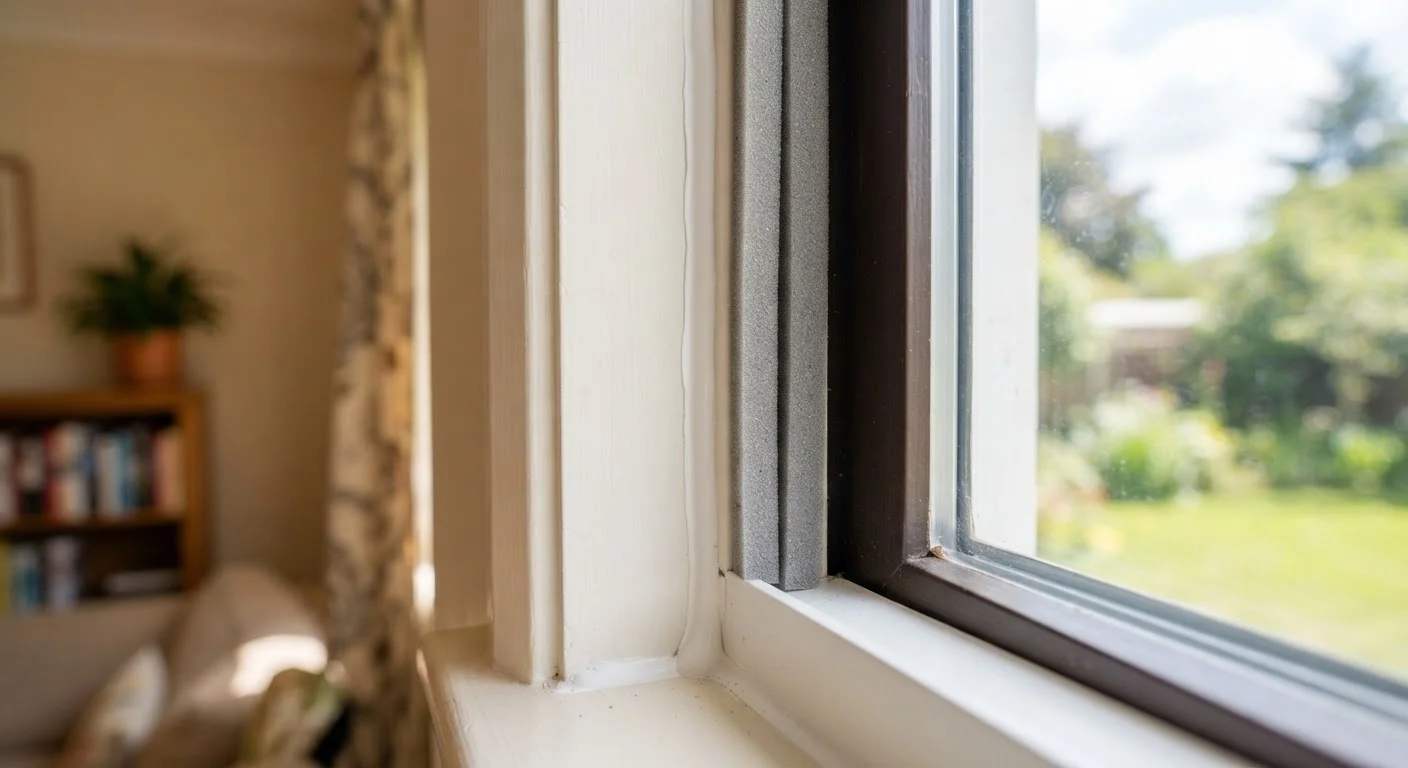
Photo: QuickSearches.net | It Doesn't Get Quicker Than This! editorial
Key Takeaways
- Caulk is a sealant applied to stationary gaps; weatherstripping is a compressible material applied to moving joints.
- Using caulk on a door or operable window edge will cause it to crack and fail quickly because of repeated movement.
- Most homes need both products - they address different problems and work best when used together.
- Silicone caulk handles exterior conditions well; acrylic latex caulk is easier to work with indoors.
- Weatherstripping is available in foam, felt, vinyl, and door-sweep forms - match the material to the gap size and traffic level.
Why the Gap Type Determines the Right Material
Not all drafts are created equal, and the fix for one type of gap can actually make another type worse. The core distinction is simple: stationary gaps need caulk; moving joints need weatherstripping.
Caulk is a flexible sealant that cures in place. Once dry, it bonds to both surfaces it bridges. That's perfect when those surfaces aren't going anywhere - like the joint between a window frame and exterior siding, or a baseboard and the wall behind it. When applied correctly to a static gap, caulk can last a decade or more.
Weatherstripping, by contrast, is a compressible material - foam, felt, vinyl, or rubber - installed along the edges of doors and operable windows. Each time the door closes, the weatherstripping compresses to form a seal; when it opens, the material springs back. No rigid sealant can survive that kind of repeated stress. Caulk applied to a door stop will crack within weeks.
| Criterion | Caulk | Weatherstripping |
|---|---|---|
| Best gap type | Stationary cracks and joints | Moving edges and closures |
| Typical locations | Window/door frames, baseboards, penetrations | Door stops, sashes, thresholds |
| Installation skill level | Moderate (requires prep and technique) | Easy to moderate |
| Durability | 5-20 years (product dependent) | 1-10 years (material dependent) |
| Paintable | Depends on type (latex: yes; silicone: no) | Generally not painted |
| Cost range | Generally low cost per tube | Low to moderate per door/window |
| Fails if misused when | Applied to moving joints | Applied over dusty or wet surfaces |
Where Each One Belongs in Your Home
A good draft audit starts from the outside and works its way in. Run your hand slowly along window frames, door frames, baseboards, and any penetration point (pipes, wires, vents) on a cold or windy day. You'll feel the difference between a drafty movable joint and a cracked static gap.
Use Caulk For:
- The perimeter joint between window or door frames and the surrounding wall surface (interior and exterior)
- Gaps where baseboards or crown molding meet walls or floors
- Cracks around pipe and wire penetrations through walls
- Gaps between sill plates and foundations in basements or crawlspaces
Use Weatherstripping For:
- The top, sides, and bottom of exterior door frames (the door stop area)
- Operable window sashes - both the closing edge and the meeting rail on double-hung windows
- Garage doors along all four edges
- Attic access hatches
Don't Forget Interior Door Frames
Choosing the Right Type of Each Product
Once you've identified what you're sealing, the next step is picking the right formulation. Within each category, materials vary in durability, ease of use, and appropriate location.
Caulk Types at a Glance
- Silicone caulk: Highly durable and waterproof; ideal for exterior use and areas that get wet. Harder to apply cleanly and cannot be painted.
- Acrylic latex caulk: Easier to tool and paint over; well suited for interior gaps like baseboards and trim. Clean up with water before it cures.
- Siliconized acrylic (hybrid): Combines paintability with better moisture resistance - a versatile option for interior window frames.
Weatherstripping Types at a Glance
- Foam tape: Inexpensive and easy to install; best for irregular gaps but compresses flat over time with heavy use.
- V-strip (tension seal): Durable and nearly invisible once installed; works well for the sides of door frames and double-hung window channels.
- Door sweeps: Attach to the bottom of exterior doors to block the gap at the threshold; available in brush or rubber seal styles.
- Reinforced vinyl or rubber: Longer-lasting than foam for high-traffic doors; stapled or nailed into wood door stops.
Before applying either product, clean and dry the surface thoroughly. Caulk won't adhere to dusty or damp surfaces, and adhesive-backed weatherstripping will peel away from dirt or moisture.
The content on this site is provided for informational purposes only and should not be considered a substitute for professional advice. While we strive to provide accurate and up-to-date information, we make no guarantees regarding its completeness or accuracy. Always consult a qualified professional for advice specific to your circumstances before making any decisions