
Why Stretching After Exercise Matters More Than Before

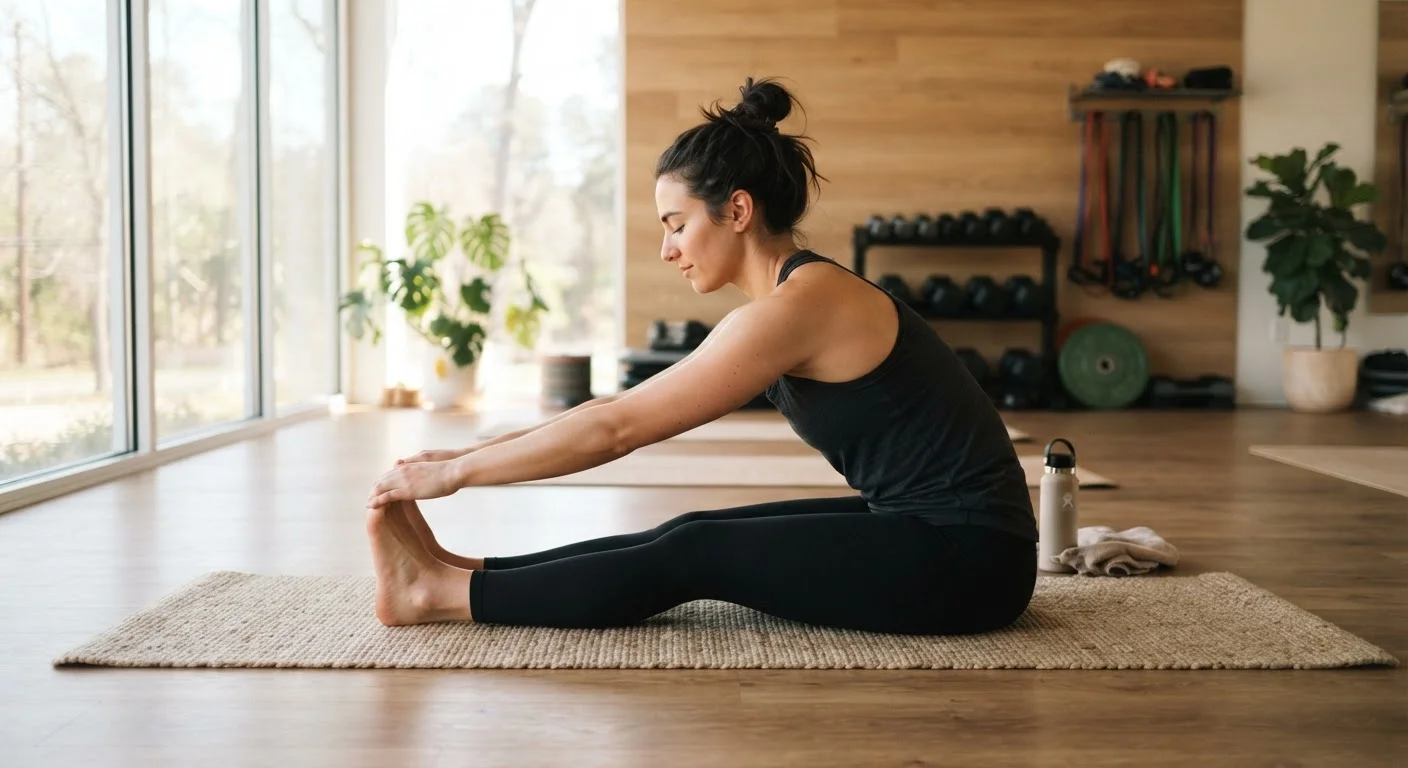
Photo: QuickSearches.net | It Doesn't Get Quicker Than This! editorial
Key Takeaways
- Static stretching after exercise improves flexibility more effectively than stretching before a workout.
- Pre-workout static stretching can temporarily reduce muscle strength and power output.
- Warm muscles post-exercise are more pliable, making cool-down stretches safer and more effective.
- A consistent 5-10 minute post-workout stretch routine supports long-term recovery and mobility.
- Skipping the cool-down doesn't cause injury on its own, but it slows flexibility gains over time.
The Stretching Habit Most People Get Backwards
Ask almost anyone about their pre-workout routine and you'll hear about stretching. Ask about their cool-down and you'll often hear a sheepish "I usually just leave." This widespread habit - prioritizing stretching before exercise while skipping it after - turns out to be the opposite of what exercise science supports.
This isn't about blaming anyone for skipping the cool-down. When you're done with a workout, the last thing you want to do is spend another ten minutes on the floor. But understanding why post-exercise stretching matters more - and what you're actually losing by skipping it - makes it much easier to stick with the habit.
Many fitness myths are harmless, but this one has a real cost: slower flexibility gains, missed recovery benefits, and muscles that gradually lose their range of motion over months and years of training.
Myth
You should always stretch before a workout to prevent injury.
Fact
Static stretching before exercise has not been shown to reliably prevent injury and can temporarily reduce muscle strength and power.
Research published in leading sports medicine journals has consistently found that prolonged static stretching before exercise - the kind where you hold a position for 20-30 seconds or more - can temporarily decrease muscle force output by a measurable margin. For activities requiring strength, speed, or explosiveness, this is counterproductive. A dynamic warm-up (leg swings, arm circles, light cardio) is better suited before a workout, while static stretching shines during the cool-down.
Myth
Skipping the cool-down stretch is fine as long as you stretched before.
Fact
Pre-workout stretching does not substitute for post-workout stretching, which is when the most meaningful flexibility gains occur.
Your muscles are at their most pliable when they're warm - which is exactly the state they're in at the end of a workout, not the beginning. Holding stretches at the end of exercise, when muscle temperature is elevated and blood flow is high, allows connective tissue to lengthen more effectively. Skipping this window consistently means you're leaving most of the flexibility benefit on the table, regardless of what you did beforehand.
Myth
Stretching after a workout prevents all muscle soreness.
Fact
Post-workout stretching can reduce feelings of tightness but does not eliminate delayed-onset muscle soreness (DOMS).
Delayed-onset muscle soreness (DOMS) - the stiffness and achiness that typically peaks 24-48 hours after an unfamiliar or intense workout - is caused primarily by microscopic muscle damage and the resulting inflammatory response. Stretching does not reverse this process. However, gentle post-workout stretching may reduce the sensation of immediate tightness and support circulation, making the recovery period feel more manageable. Don't skip stretching because it won't eliminate soreness entirely; its benefits are real, just different from what many people expect.
Myth
Flexibility is mostly genetic, so stretching routinely won't change much.
Fact
Flexibility is highly trainable at virtually any age, and consistent static stretching produces measurable range-of-motion improvements over weeks.
While genetics play some role in baseline joint structure, research consistently shows that regular static stretching - performed several days per week over a period of weeks - produces significant and lasting improvements in range of motion. Studies on older adults have shown meaningful flexibility gains even later in life, demonstrating that this benefit is not reserved for young athletes. Consistency is the primary driver, not genetic predisposition.
Myth
If a stretch doesn't hurt, it isn't working.
Fact
Effective stretching should produce a sensation of mild tension, not pain. Stretching into pain risks muscle strain.
The "no pain, no gain" mindset, while sometimes applied to strength training in a limited context, is genuinely counterproductive when it comes to stretching. Pushing a muscle beyond a comfortable range of tension can trigger the stretch reflex - a protective contraction that actually works against lengthening - and increases the risk of small tears in muscle fibers or connective tissue. A gentle, sustained pull at the edge of your comfortable range is where flexibility improvements happen safely.
What Happens to Your Muscles at the End of a Workout
During exercise, your muscles repeatedly contract and generate heat. By the time you finish a run, a strength session, or even a brisk walk, your muscle tissue is warmer, more supple, and temporarily more elastic than it is when you're cold. This is the physiological window where stretching delivers its greatest benefit.
When you lengthen a warm muscle and hold that position for 20-30 seconds (known as static stretching), you're working with your body's natural state rather than against it. The connective tissue - including tendons and fascia - responds more readily to sustained lengthening when it's warm. This is why flexibility gains accumulate far more efficiently after a workout than before one.
20-30 sec
Minimum hold time for static stretch effectiveness
Exercise physiology research generally supports holding static stretches for at least 20-30 seconds to achieve meaningful lengthening of muscle tissue.
4-8 weeks
Timeframe for measurable flexibility gains
Studies on consistent stretching programs report significant range-of-motion improvements within 4 to 8 weeks in both active and sedentary adults.
This also matters for recovery. Gentle post-workout stretching helps reduce the sensation of tightness that often sets in within hours after exercise. While it won't eliminate delayed-onset muscle soreness, it supports circulation in the muscles you've just worked - which is a meaningful part of the recovery process.
If you're fitting workouts into a packed schedule, see how to build movement habits around a 9-to-5 life - a short cool-down can be built into even the tightest windows.
Building a Short, Effective Post-Workout Stretch Routine
You don't need a complicated routine. A focused 5-10 minute cool-down targeting the major muscle groups you used during your workout is enough to capture most of the benefit. The key principles are straightforward:
- Hold each stretch for at least 20-30 seconds. Brief bouncy stretches don't create the sustained lengthening needed for flexibility improvements.
- Breathe steadily. Slow exhales help your nervous system relax into the stretch, allowing a greater range of motion.
- Stretch what you worked. After a lower-body session, prioritize hip flexors, hamstrings, quads, and calves. After upper-body work, focus on shoulders, chest, and lats.
- Stop at mild tension, not pain. Stretching should never be sharply painful. A feeling of gentle pulling is the target.
Consistency matters far more than duration. A short stretch every workout day will produce more lasting flexibility than an occasional long session. If you're curious about how stretching fits alongside other workout decisions - like whether to do cardio or strength training first - the same principle applies: sequencing your routine thoughtfully compounds results over time.
Sharp Pain During Stretching Is a Warning Sign
This article is for general informational purposes only and is not a substitute for professional medical or fitness advice. If you have an existing injury, chronic condition, or specific health concern, consult a qualified healthcare professional before beginning any new exercise or stretching routine.
The content on this site is provided for informational purposes only and should not be considered a substitute for professional advice. While we strive to provide accurate and up-to-date information, we make no guarantees regarding its completeness or accuracy. Always consult a qualified professional for advice specific to your circumstances before making any decisions