
Credit & Banking

Opening a New Bank Account: What to Have Ready Before You Apply

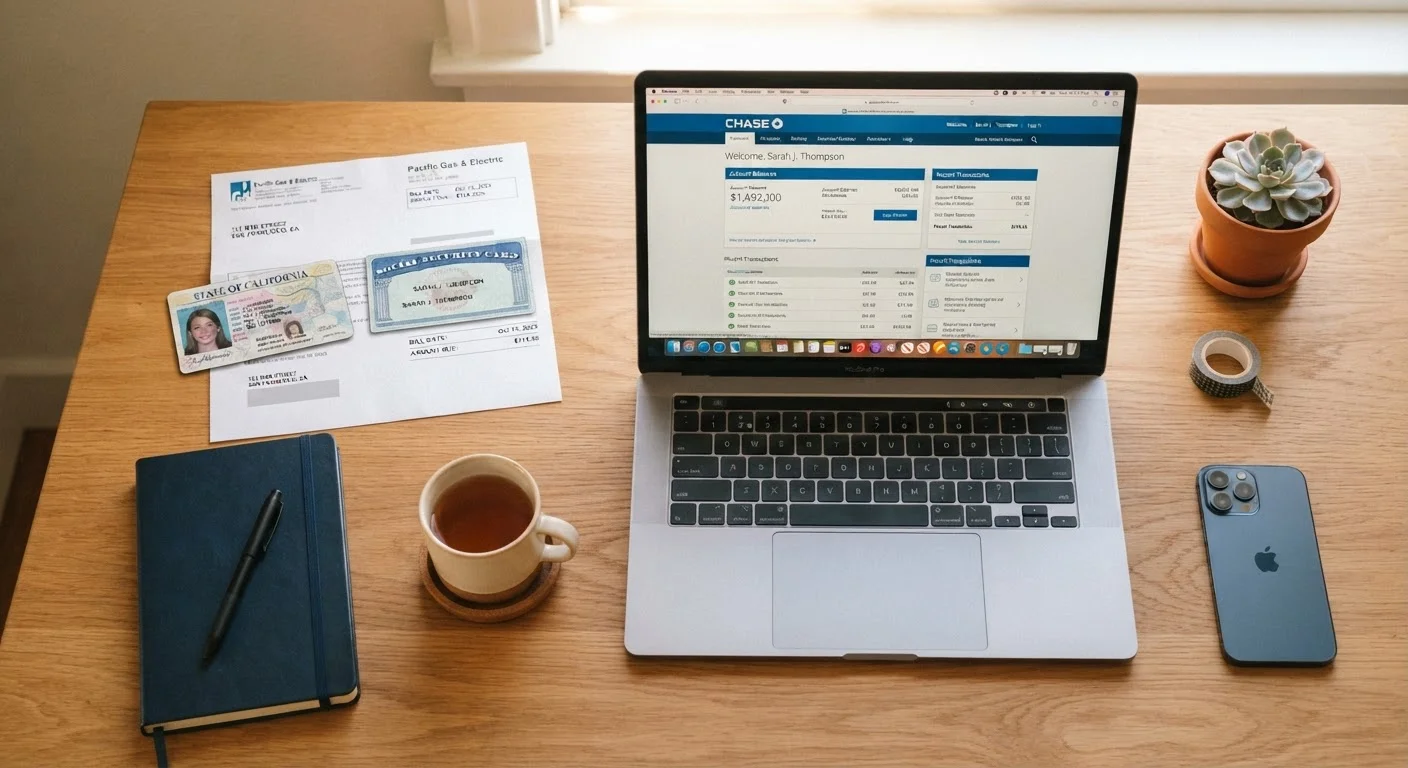
Opening a New Bank Account: What to Have Ready Before You Apply

Photo: QuickSearches.net | It Doesn't Get Quicker Than This! editorial

Banks ask for more than most people expect. Use this checklist to gather the documents, details, and decisions you'll need before sitting down to apply.

Key Takeaways

  • Banks require government-issued photo ID and a Social Security number or ITIN for every applicant.
  • You'll need a physical address — P.O. boxes are rarely accepted on their own.
  • An opening deposit is required at most banks, even for accounts with no ongoing minimum balance.
  • ChexSystems history can affect your ability to open an account, so check your report before applying.
  • Knowing the account type you want before applying saves time and avoids mismatched products.

Why Preparation Matters More Than Most People Realize

Opening a bank account looks simple from the outside — fill out a form, hand over some cash, done. In practice, banks are required by federal law to verify your identity before letting you open an account, and that means collecting specific documents and information up front. Show up without what they need, and you'll either be turned away or have to restart the process another day.

This checklist covers everything you're likely to need, whether you're applying in person at a branch or online. If you're brand new to banking and want a primer on the basics before diving in, the plain-English guide to credit and banking is a good starting point. Once you've applied, you'll also want to think about whether a checking or savings account fits your needs — or both.

ChexSystems Can Block Your Application

Many people don't know that banks routinely check a consumer reporting agency called ChexSystems, which tracks overdrafts, unpaid fees, and accounts closed for cause. A negative ChexSystems record can result in a declined application — even if your credit score is fine. Check your report before you apply so there are no surprises.

What You'll Need to Gather

Work through the checklist groups below before you sit down to apply. Most items take only a few minutes to locate — the goal is to have everything in one place so the application goes smoothly in one sitting.

Identity Documents

Locate a valid, government-issued photo ID such as a driver's license, state ID card, or passport — it must not be expired. Must
Have your Social Security number (SSN) or Individual Taxpayer Identification Number (ITIN) ready; most banks require it for identity verification and tax reporting purposes. Must
If you're a non-citizen, gather any additional identity documents your bank may require, such as a permanent resident card, visa, or passport. Must
Bring a second form of ID (credit card, employee badge, or student ID) as backup, since some banks request supplemental verification. Should

Address and Contact Information

Confirm your current physical street address — P.O. boxes are not accepted as a primary address at most banks. Must
Prepare a recent utility bill, lease agreement, or official mail showing your name and current address in case the bank needs proof of residence. Should
Have a working email address and phone number ready, as banks use these for account alerts and security verification. Must

Opening Deposit

Check the bank's minimum opening deposit requirement before applying — amounts vary widely from $0 to $100 or more depending on the institution and account type. Must
Have your funding method ready: a debit card, existing bank account number and routing number, check, or cash for in-branch applications. Must
Review any ongoing minimum balance requirements that could trigger monthly fees if your balance drops below a threshold. Should

Banking History Check

Request your free ChexSystems report at consumerdebit.com before applying — ChexSystems tracks past account closures, overdrafts, and unpaid fees, and many banks check it during the application process. Must
Review your ChexSystems report for errors and dispute any inaccuracies before submitting an application. Should
If your ChexSystems history shows problems, research whether the bank offers 'second chance' checking accounts designed for applicants with past banking issues. Nice to have

Account Decisions to Make in Advance

Decide whether you need a checking account, a savings account, or both — each serves a different purpose and comes with different features and rules. Must
Review the fee schedule for the account you're considering, paying attention to monthly maintenance fees, overdraft fees, and ATM charges. Must
Decide whether you want to set up direct deposit, and if so, confirm you have your employer's payroll department contact or HR portal access to update your deposit information after opening. Should
Consider whether you want overdraft protection linked to a savings account or a line of credit, and understand the terms before opting in. Nice to have

If you plan to open multiple accounts down the road, the same documents usually cover all of them. For tips on organizing money across accounts once they're open, see managing multiple bank accounts without losing track of your money.

Federal Law Requires Identity Verification

Under the USA PATRIOT Act's Customer Identification Program rules, banks are legally required to verify the identity of every new account holder. This isn't a policy that varies by institution — it applies everywhere. You cannot open an account anonymously or skip the ID step, regardless of how much money you're depositing.

Tools That Help You Apply

Depending on how and where you apply, a few additional resources can make the process smoother.

Required

ChexSystems Consumer Disclosure

Lets you request your free banking history report to check for any flags that could affect your application before you apply.

Optional

AnnualCreditReport.com

Provides free access to your credit reports from the three major bureaus — some banks run a credit check as part of the account-opening process.

Required

Bank's fee schedule or account disclosure document

Outlines all fees, minimum balances, and account terms so you can compare options before committing to a specific account.

This article is for general informational purposes only and does not constitute financial advice. Consult a qualified financial professional for guidance specific to your situation.

Finance Editorial Team

QuickSearches.net | It Doesn't Get Quicker Than This!

Finance Editorial Team is the collective byline for our editorial team and contributor network. Articles published under this byline or an editorial pen name are researched, written, and reviewed according to our editorial standards for clarity, consistency, and independence before publication.

Budgeting BasicsSaving & DebtCredit & Banking
View author profile

The content on this site is provided for informational purposes only and should not be considered a substitute for professional advice. While we strive to provide accurate and up-to-date information, we make no guarantees regarding its completeness or accuracy. Always consult a qualified professional for advice specific to your circumstances before making any decisions